
When AI Operators Left the Terminal: The Blender Signal
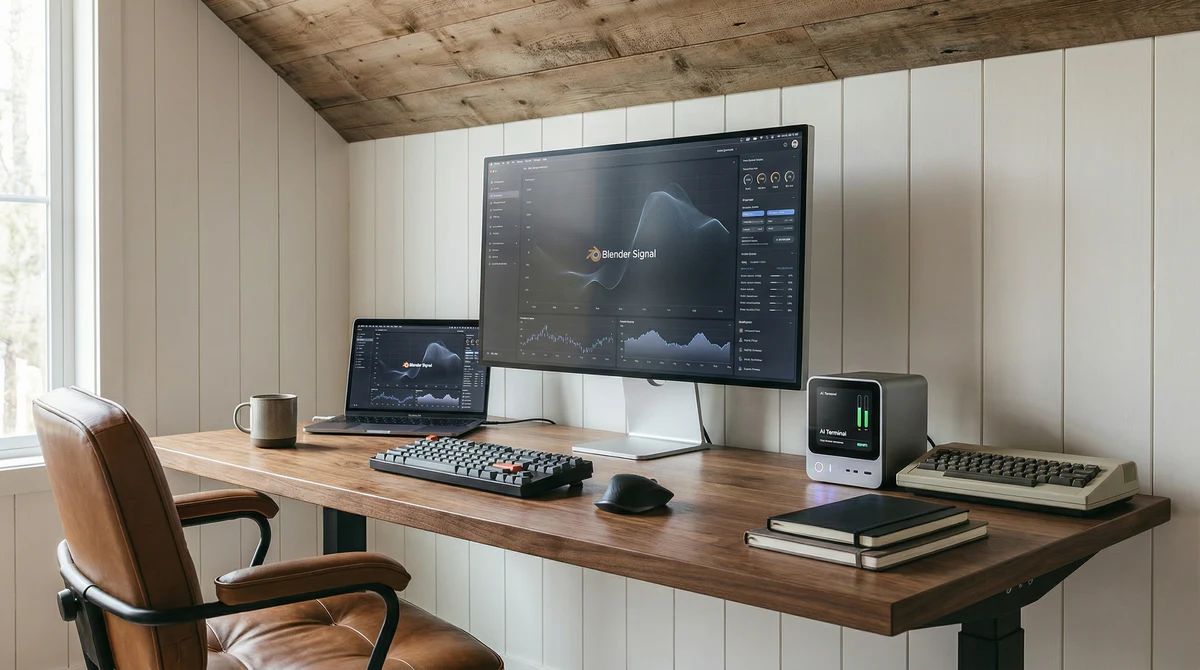
Someone published a video this week showing OpenClaw controlling Blender. Five-minute setup. The agent generates 3D assets, then builds a website using them. The whole thing runs from a chat window.
The comments are full of 3D artists and motion designers saying "I need this."
That's the signal.
Operators Started in the Terminal
The first wave of AI operator adoption was almost entirely technical. The use cases were code-adjacent: writing functions, reviewing PRs, managing GitHub issues, running shell commands. The operators were developers, and the tools were developer tools.
That made sense. Developers were the first group fluent enough with AI to wire up an agent and trust it with something real. The feedback loops were tight. The failures were visible. The upside was obvious.
But the terminal was always just the first door.
Then Ops
The second wave moved into knowledge work and operations: email triage, calendar management, research, task automation, CRM updates. Operators built agents that handled the administrative layer of running a business or a project.
This brought in a different kind of user. Not just developers — founders, solo operators, anyone managing information-heavy workflows. The pattern was the same: find the repetitive, structured work, put an agent on it.
The thing about knowledge work is that it's enormous. The amount of human time spent on email, scheduling, and documentation dwarfs the amount spent writing code. So the second wave was bigger than the first.
Now Creative Tools
The Blender video is a third door opening.
Creative professionals spend huge portions of their time on work that is structured and repetitive — asset manipulation, scene setup, iterating on variations, exporting in different formats, building the browser-ready version of a 3D thing they just made. Not the creative decisions. The execution of those decisions.
That's agent territory.
What's different about creative tools is the audience. 3D artists, motion designers, game developers, UI/UX designers — this is a community that already thinks visually, already iterates quickly, and is perpetually under time pressure. They've been waiting for a workflow tool that matches how they actually work, not how software engineers think they work.
Five-minute setup to control Blender from a chat window is that tool.
What the Next 18 Months Look Like
Every domain where humans do repetitive, structured work is about to get an agent layer. That's not a prediction — it's already happening at the edges.
Video editing. Audio production. Graphic design. Photography workflows. Print layouts. Each of these has the same structure: creative decisions made by humans, execution work that could be automated.
The operators who are already running agents — in dev, in ops, in their personal workflows — have a significant head start on understanding how to wire this up. They've already learned the hard lessons: how to give an agent clear instructions, how to design feedback loops, when to trust the output and when to verify.
That knowledge transfers. The Blender agent works the same way Chief works. Different domain, same architecture.
The Solo Operator Advantage
Here's what I think this actually enables: the solo creative who builds and ships becomes dramatically more powerful.
Today, a solo developer can build a product. They can code it, test it, deploy it. What they struggle with is everything else: the design, the 3D assets, the motion graphics, the website polish.
If an operator-fluent developer can also run a Blender agent, a design agent, a copy agent — all orchestrated through something like OpenClaw — the gap between "solo" and "small team" closes significantly.
That's the operator advantage the next wave of creative adoption unlocks. Not AI replacing creatives. Operators combining creative + technical + ops leverage in a single person.
The terminal was just the beginning.
Video: I Gave OpenClaw Blender Skills (The Results are INSANE)
Related Posts
The Larry Effect: When Distribution Becomes a System You Build
Larry drove 8M views in a week by running distribution on autopilot. The lesson isn’t the skill — it’s that distribution is becoming an operator problem with an agent solution.
AI for Creatives Isn’t Art Generation. It’s Operator-Controlled Tooling.
OpenClaw controlling Blender/Figma/After Effects is the real unlock for AI in creative teams: not generating art, but automating the click-loop work around creation.
I Predicted One Senior Dev and an Army of Agents. Tonight It Happened.
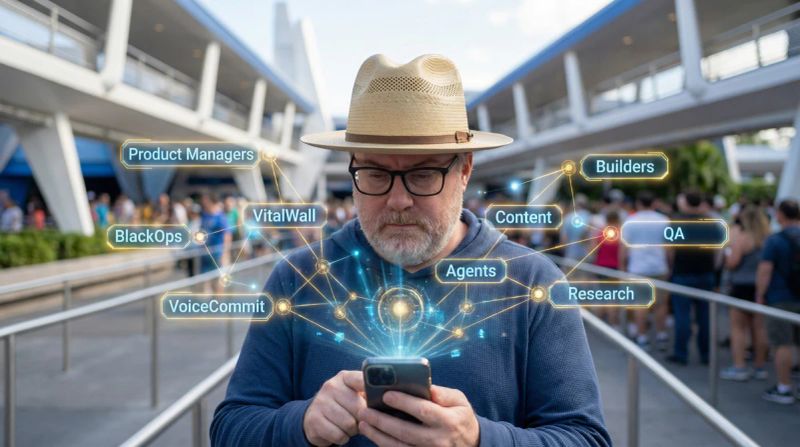
Last year I predicted the future dev team: one senior engineer and an army of AI agents. Tonight, from a phone at Epcot, I watched 10 AI agents run a standup, find production bugs, debate priorities, deploy fixes, and verify them. The prediction is no longer a prediction.