
AI for Creatives Isn’t Art Generation. It’s Operator-Controlled Tooling.
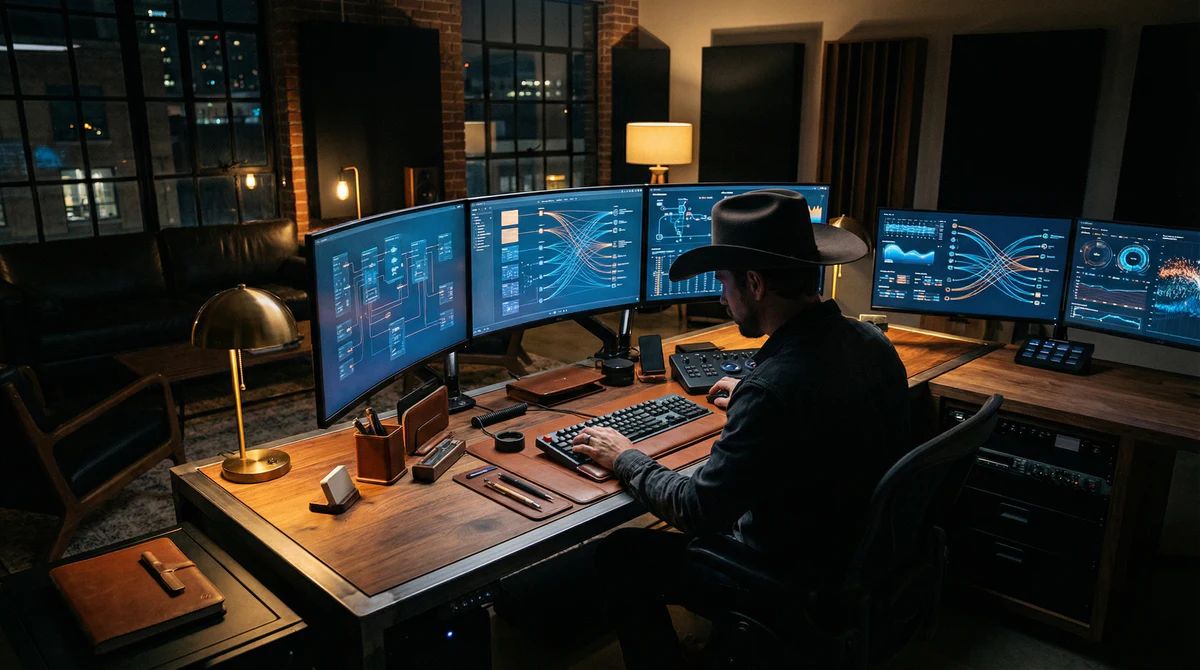
Riley Brown posted a demo of OpenClaw controlling Blender. Same approach works with Cinema 4D, After Effects, and Figma.
This is the moment I’ve been waiting for: AI operators leaving developer tools and entering creative tools.
The Misread: "AI Makes Art"
Most of the conversation around "AI for creatives" is stuck in the wrong frame. It’s either:
- AI replaces artists, or
- AI generates content faster.
That’s not the interesting part.
The interesting part is the work surrounding creation — the click-loop tasks that eat hours and don’t require taste:
- making variations
- exporting in six formats
- resizing for every channel
- naming files consistently
- moving assets between tools
- creating the web-ready version of a scene
- producing the "good enough" draft for review
That’s operator work.
Creative Ops Is About Throughput
Design teams don’t fail because they lack ideas. They fail because throughput breaks.
A designer can make something great. The system around them can’t ship it:
- the handoff is messy
- the exports are missing
- the spec is unclear
- the Figma file isn’t organized
- the After Effects render needs three tweaks
So the iteration loop slows down. Everything gets stuck in review.
An agent that can drive the actual tools changes the shape of that loop.
What OpenClaw in Blender/Figma/AE Actually Unlocks
The new workflow is:
- Human makes the taste decision (what should it look like?)
- Agent handles execution loops (make 10 variations, export, package, deliver)
- Human reviews, agent iterates
That’s the same pattern we’ve been using in software: the senior engineer sets direction, the agent executes, QA verifies, the loop tightens.
Now it moves into design.
Why This Matters for Founders
If you’re building products, the bottleneck is rarely code anymore. It’s everything around code:
- design
- motion
- screenshots
- landing pages
- marketing assets
- the endless small creative tasks that keep shipping from happening
When operators show up in creative tooling, a solo founder can close more of that gap. Not because they become a designer. Because they can run a system that produces design output reliably.
The Next 18 Months
This is how operator adoption expands:
- first: dev workflows
- then: ops/knowledge work
- now: creative tooling
The core lesson doesn’t change: value comes from the system you build, not the model underneath.
The teams that win won’t be the ones who try to replace their designers with AI. They’ll be the ones who build an operator layer around their designers and make the iteration loop brutally fast.
That’s what an AI-native creative workflow actually looks like.
Bookmark reference: https://x.com/rileybrown/status/2023938290567835943
I wrote this post inside BlackOps, my content operating system for thinking, drafting, and refining ideas — with AI assistance.
If you want the behind-the-scenes updates and weekly insights, subscribe to the newsletter.
Related Posts
The Larry Effect: When Distribution Becomes a System You Build
Larry drove 8M views in a week by running distribution on autopilot. The lesson isn’t the skill — it’s that distribution is becoming an operator problem with an agent solution.
When AI Operators Left the Terminal: The Blender Signal
Someone showed OpenClaw controlling Blender this week. The 3D artist comments said 'I need this.' That's a signal — and it tells you exactly what the next 18 months of operator adoption look like.
I never remember to send my newsletter, so BlackOps sends it now
My last newsletter went out August 19. So I built Newsletter Autopilot: if I miss my deadline, BlackOps writes the issue from what I published and tells you it's covering for me.