
What Two Weeks of Real-World Building with Claude Code Revealed

For decades, serious software development has depended on ideal conditions: long, uninterrupted blocks of time, sustained focus, and environments carefully optimized for productivity. Over the last two weeks of the year, while officially on vacation and spending time with my family, I learned how quickly that assumption is becoming outdated.
Between December 21 and January 6, most of my work happened on a laptop, on the couch, in short and irregular sessions. There were no long nights and no attempt to maximize output. Despite that, I shipped more production-grade software in sixteen days than I typically would during a focused sprint. The difference wasn't effort or urgency. It was leverage.
This was not an experiment or a throwaway project. The work completed during this period was core infrastructure for a multi-tenant SaaS platform, the kind of system that must be secure, observable, and maintainable over time. That context matters, because much of the current discussion around AI-assisted development assumes that speed only applies to disposable code. What I experienced was the opposite: as the cost of doing things correctly dropped, the temptation to cut corners disappeared.
After the fact, I asked Claude Code a single question: generate a report of all work completed over the last sixteen days. No hand curation. No selective memory. Just a summary derived directly from repository history. The resulting snapshot was both comprehensive and unambiguous.
In that period, there were 153 commits, averaging just under ten per day. More than 500 files were touched, with over 52,000 lines changed and a net increase of roughly 33,000 lines of TypeScript. Thirteen database migrations were applied. This was not batched work or artificially inflated activity; it was continuous, incremental progress captured directly from version control.
The composition of those commits was more revealing than the raw volume. Feature development and bug fixes were perfectly balanced, with 53 of each, alongside 20 documentation commits. That symmetry reflects healthy feedback loops. When verification, correction, and explanation are cheap, they happen immediately instead of being deferred. Building fast and maintaining quality stop being opposing forces.
The systems shipped during this window were substantial: a persistent operator memory layer, a global multi-threaded thinking space, real-time push notifications, SaaS-level administrative alerts, an embeddable and SEO-safe blog widget, a shared credits architecture, a Chrome extension release that passed store review, a redesigned Twitter reply workflow, image iteration tooling, full account security flows, and background job observability. These are the kinds of features that typically stall when work becomes fragmented. Here, fragmentation didn't matter because each increment was small, verifiable, and safe to complete in short sessions.
The most important change, however, was not visible in the feature list. It appeared in how the work was approached. Documentation was written as decisions were made, not deferred. Bugs and tradeoffs were tracked explicitly. Weekly completion logs replaced mental bookkeeping. An extensive project context document evolved alongside the codebase, significantly reducing the cognitive burden of resuming work after breaks. Testing and validation followed the same pattern. UI changes required evidence. Routes were verified across tenants. Security boundaries were revisited continuously rather than audited later. Cost models and API usage were surfaced and recalibrated in real time.
None of this reflects new knowledge. Experienced developers already understand the importance of documentation, testing, security, and cost awareness. What changed was the effort required to act on that understanding. Claude Code did not replace judgment or architectural thinking. It removed the drag between recognizing the right thing to do and implementing it safely. The distance between problem identification, solution design, and execution collapsed.
One thing that became obvious over these two weeks was how much of the leverage came before any code was written. Planning with Claude Code changed the shape of the work. Instead of holding architecture, edge cases, and sequencing in my head, I externalized them early and cheaply. That meant each short session started with clarity rather than reorientation.
The next step for me was making that context persistent across sessions, not just within one. That's the problem BlackOps Brain solves: compile your entire knowledge base into a single structured note any agent can read, update, and carry from session to session. The planning advantage compounds when your context doesn't reset.
After finishing this stretch, I came across a thread by one of the creators of Claude describing a similar workflow: using the model not as a typing accelerator, but as a planning and thinking partner that compresses complex work into smaller, safer execution steps. That alignment mattered to me, because it confirmed something important. The productivity gain wasn't about generating more code. It was about front-loading reasoning so that execution became almost routine.
This also explains why reactions to AI-assisted development vary so widely. Less experienced developers often use these tools to decide what to build or how something works. More experienced developers use them to eliminate friction between decisions they already know how to make. The tools are the same; the leverage is not.
What This Means for Teams and Organizations
The real implication here is not speed. It is sustainability. When the cost of doing the right thing drops low enough, high-quality work no longer requires perfect conditions. Progress no longer depends on uninterrupted time or carefully protected focus. Serious systems can be built incrementally, reviewed continuously, and improved calmly, even alongside the realities of everyday life.
For teams, this changes how work can be structured. Smaller, safer increments reduce risk. Documentation and verification become defaults rather than process overhead. For organizations, it challenges assumptions about productivity, staffing, and tooling. The constraint is no longer time or headcount; it is judgment and clarity of intent. Teams that invest in tools and workflows that compress execution without eroding decision-making will compound their advantage rapidly.
Over these two weeks, I wasn't trying to prove a point. I was simply building, under ordinary conditions, during a period that traditionally produces little meaningful progress. The fact that this level of output was possible is the signal. Software development is entering a phase where quality work is no longer gated by ideal environments, and organizations that recognize this early will operate very differently from those that do not.
If you're building this way — using Claude Code as a thinking partner, compressing execution cycles, planning before you write a line — BlackOps Center is the content OS built for exactly this workflow. Draft posts, schedule threads, and ship your build-in-public story without leaving Claude.
Appendix: Claude Code Usage Report (16 Days)
Period: December 21, 2025 – January 6, 2026
Source: Generated from a single Claude Code prompt summarizing repository activity over the period.
Summary Metrics
| Metric | Value | |-----------------------|-------| | Total Commits | 153 | | Average Commits / Day | 9.6 | | Peak Day | Dec 31 (23 commits) | | Files Changed | 568 | | Lines Added | 43,048 | | Lines Deleted | 9,631 | | Net New Lines | 33,417 | | Total Lines Touched | 52,679 | | Database Migrations | 13 |
Commit Distribution
| Type | Count | |----------|-------| | Features | 53 | | Fixes | 53 | | Docs | 20 | | Refactor | 10 | | Perf | 4 | | Style | 3 | | Chore | 2 |
Major Systems Shipped
-
Operator memory system (preference-aware AI behavior)
-
Global operator chat (multi-thread strategic thinking)
-
PWA push notifications
-
Platform admin alerts (signups, payments, summaries)
-
Embeddable blog widget (JS, iframe, HTML API)
-
User-level shared credits architecture
-
Chrome extension v2.2.0 (store compliant)
-
Twitter reply workflow redesign
-
Image iteration and refinement system
-
Full password reset and account security flows
-
Global state management optimizations
-
Background job logging and observability
Architectural and Process Signals
-
Documentation-driven development with weekly completion logs
-
Explicit decision and bug tracking
-
800+ line project context file maintained alongside code
-
Verification-first UI and routing protocols
-
Cost-aware credit and API usage modeling
-
Security-first database and tenant isolation practices
Planning as a first-class activity:
A significant portion of progress during this period came from planning sessions with Claude Code that externalized architecture, sequencing, and edge cases before implementation. This mirrors workflows described publicly by Claude's creators and helps explain why complex work could be executed safely in short, fragmented sessions.
All data above reflects actual repository history and was produced without manual selection or modification.
This post came out of a Brain.
Talk through what you already know. BlackOps turns it into a structured knowledge base, then writes and publishes from it, to your own domain, X, LinkedIn, Threads, and your newsletter. No email until you have seen your Brain.
I wrote this post inside BlackOps, my content operating system for thinking, drafting, and refining ideas — with AI assistance.
If you want the behind-the-scenes updates and weekly insights, subscribe to the newsletter.
Related Posts
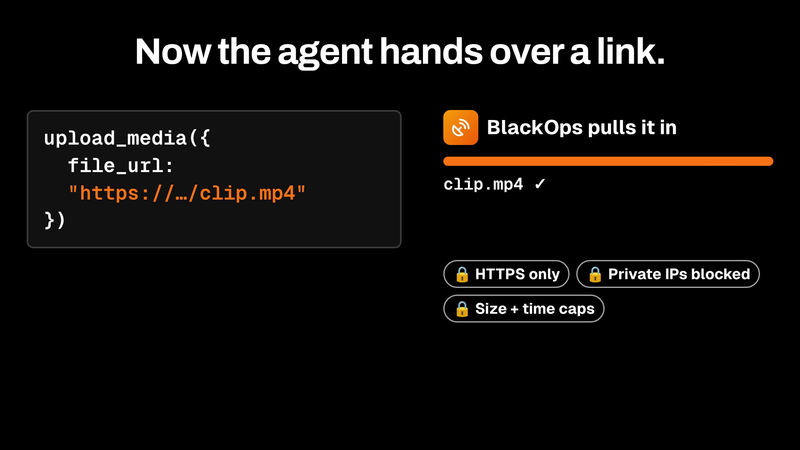
My agents upload their own media to BlackOps now
Agents can now hand BlackOps a link to an image or video, and BlackOps pulls it in and returns an ID that attaches straight to a tweet or post.
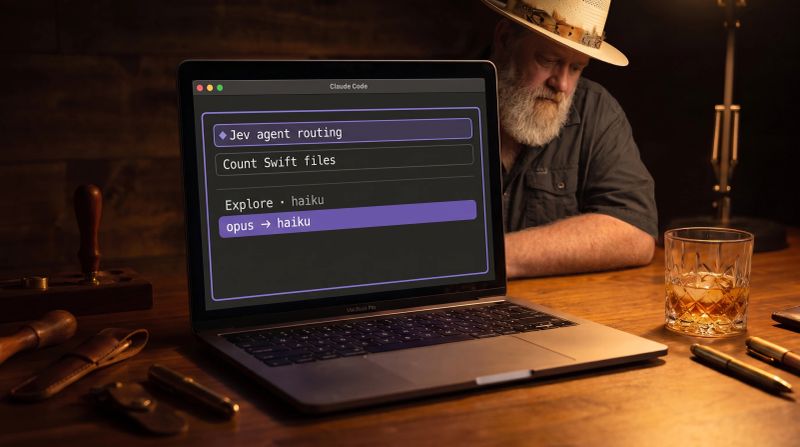
My Claude Code mod lets Jev choose the agent and model for every call
Every Claude Code subagent inherits your model, so a file count runs on Opus. I built a mod that asks Jev to pick the cheapest model that can do each job. Lookups got 51% cheaper.

I never remember to send my newsletter, so BlackOps sends it now
My last newsletter went out August 19. So I built Newsletter Autopilot: if I miss my deadline, BlackOps writes the issue from what I published and tells you it's covering for me.