
AI Is About to Make Developer Efficiency Visible
AI Is About to Make Developer Efficiency Visible
Most conversations about AI in software development focus on speed.
Developers are shipping faster. Teams are writing less code by hand. A single engineer can now build things that previously required several people.
But there is another shift happening that people are not talking about as much.
AI is introducing visibility into how developers work.
Historically, most of a developer’s process was invisible. A developer would be assigned a task and a rough timeline. Maybe a few days, maybe a week. What happened during that time was mostly opaque to the rest of the organization.
A developer might struggle for hours trying to understand a problem. They might try multiple approaches. They might rewrite the same piece of code three times before it finally worked. They might stay up late chasing down a bug that only appeared in production.
None of that was visible.
What mattered was the outcome. If the feature shipped and the deadline was met, the path that led to the solution rarely mattered.
AI tools change that dynamic in a subtle but important way.
When developers rely on AI systems to help them write and reason about code, every interaction has a cost. Prompts consume tokens. Context windows grow. Iterations accumulate. The process that was once invisible now leaves a trail.
In other words, the path a developer takes to reach a solution is no longer hidden.
And once that path becomes visible, something new starts to emerge.
Developers are no longer evaluated only on whether they can produce working code.
Increasingly, the question becomes how efficiently they were able to get there.
The Truck Driver Effect
This is not the first industry to experience a shift like this.
For a long time, truck drivers were judged almost entirely on one metric: whether the delivery arrived on time.
How the driver got there was largely unknown. They might take a direct route. They might get lost and wander around for an hour. They might burn extra fuel circling a city looking for the right exit.
As long as the delivery arrived when it was supposed to, the details of the trip were mostly invisible.
That changed when trucks started getting GPS tracking.
Once companies could see the route a truck took, the stops it made, and how long it spent idling, the evaluation criteria shifted. Drivers were no longer judged solely on arrival time. The efficiency of the route started to matter as well.
Software development is beginning to experience a similar shift.
For decades, the path a developer took to reach a working solution was largely hidden. A task was assigned, time passed, and eventually a feature appeared. The work in between was mostly invisible.
AI systems change that.
AI Introduces a Meter
When developers interact with AI systems, every step of the process leaves a trace.
Prompts consume tokens.
Context windows grow.
Iterations accumulate.
Each attempt to refine a prompt or reframe a problem adds to the total.
For the first time, the search process itself has a measurable cost.
This does not mean developers are suddenly being tracked in some new way. But the tools themselves naturally produce signals that did not previously exist.
What used to be invisible work now has a kind of meter attached to it.
And once a meter exists, people inevitably start paying attention to it.
The Sprint Scoreboard
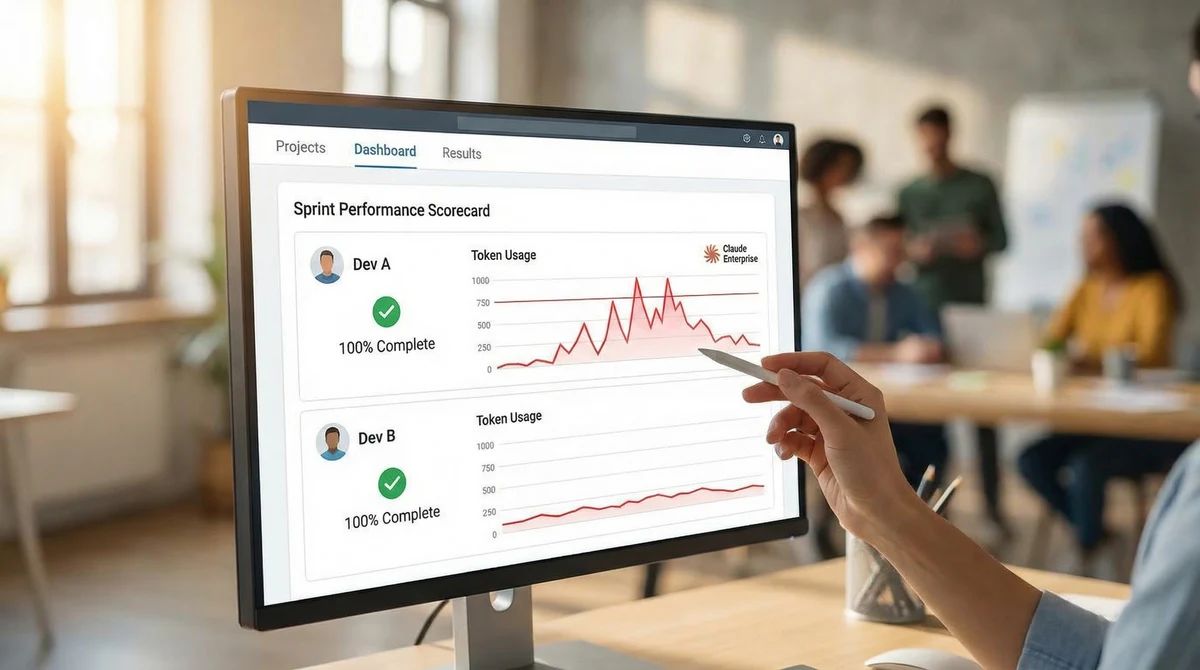
Imagine two developers working on similar features during the same sprint.
Both features ship. Both work. From the outside, everything looks the same.
But behind the scenes the process may have looked very different.
One developer used AI sparingly. They understood the problem well, framed their prompts carefully, and only went to the model when it was actually useful. They might have needed a handful of prompts to get through the work.
Another developer approached it differently. They leaned heavily on the model, tried multiple prompt variations, pasted large chunks of code repeatedly, and explored several dead ends before arriving at a working solution.
Both developers delivered the feature.
But by the end of the sprint there is now a trail showing how each one got there.
Prompt counts. Token usage. Model calls. Iteration cycles.
Put those numbers side by side and something starts to look a lot like a scoreboard.
Not a formal one. Nobody is necessarily ranking developers by token usage. But the information exists, and once it exists people start to notice patterns.
One developer consistently produces working code with relatively little AI interaction.
Another developer burns through enormous amounts of tokens trying to arrive at the same outcome.
In a world where AI usage has real costs attached to it, that difference does not stay invisible for long.
AI Does Not Remove the Skill Gap
There is a common belief that AI tools will flatten the skill curve between developers.
In practice, they may do the opposite.
Experienced engineers tend to frame problems more precisely. They provide better constraints to the model. They recognize incorrect output faster and adjust quickly. They also know when to stop prompting and simply write the code themselves.
All of these behaviors reduce unnecessary iteration and wasted tokens.
Less experienced developers often use the model differently. They experiment more, try multiple prompts, and sometimes paste large amounts of context in the hope that the model will eventually produce the right answer.
Both developers might eventually arrive at the same working solution.
But the path they take to get there can be dramatically different.
The Role of Senior Engineers
This shift also highlights the role senior engineers play inside teams.
Senior engineers do not just write code. They influence how problems are approached in the first place.
In an AI-assisted environment, that influence extends to how teams interact with models.
They shape how problems are framed. They help define the constraints that guide model output. They recognize when AI is useful and when it is adding unnecessary complexity.
In many cases, a strong senior engineer can reduce wasted effort across an entire team.
Not by writing every line of code themselves, but by helping others approach problems in ways that lead to faster and more efficient solutions.
Visibility Changes the Conversation
The introduction of GPS tracking did not change the job of a truck driver.
Drivers were still responsible for getting deliveries from one place to another.
What changed was visibility.
Once companies could see the route a truck took, the time it spent idle, and the fuel it burned along the way, the path to the destination started to matter almost as much as the destination itself.
Software development is entering a similar moment.
For a long time the path a developer took to reach a solution was mostly invisible. A task was assigned, time passed, and eventually working software appeared. The effort in between was difficult to measure.
AI systems change that because the interaction with the system leaves a trail. Prompts accumulate. Context grows. Iterations stack up.
The process that used to be hidden is now observable.
And once something becomes observable, it eventually becomes something people try to optimize.
Developers will still be judged on whether the software works.
But increasingly they will also be judged on how efficiently they were able to produce it.
Which means the metric that quietly emerges may not be story points or lines of code.
It may be something closer to quality per token.
I wrote this post inside BlackOps, my content operating system for thinking, drafting, and refining ideas — with AI assistance.
If you want the behind-the-scenes updates and weekly insights, subscribe to the newsletter.
Related Posts
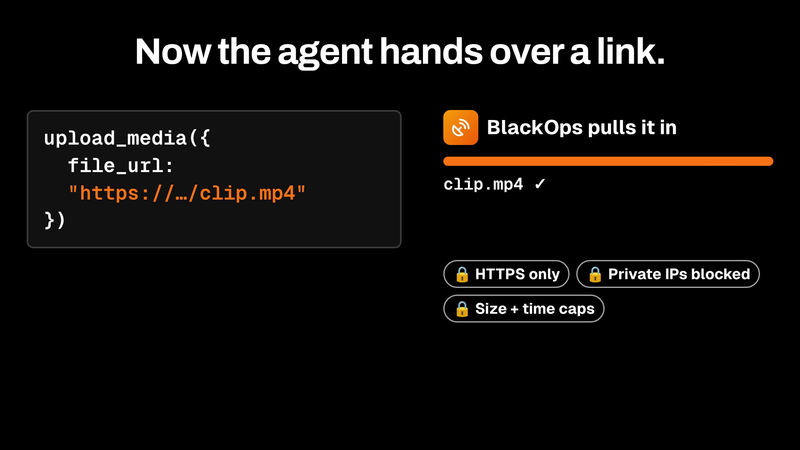
My agents upload their own media to BlackOps now
Agents can now hand BlackOps a link to an image or video, and BlackOps pulls it in and returns an ID that attaches straight to a tweet or post.
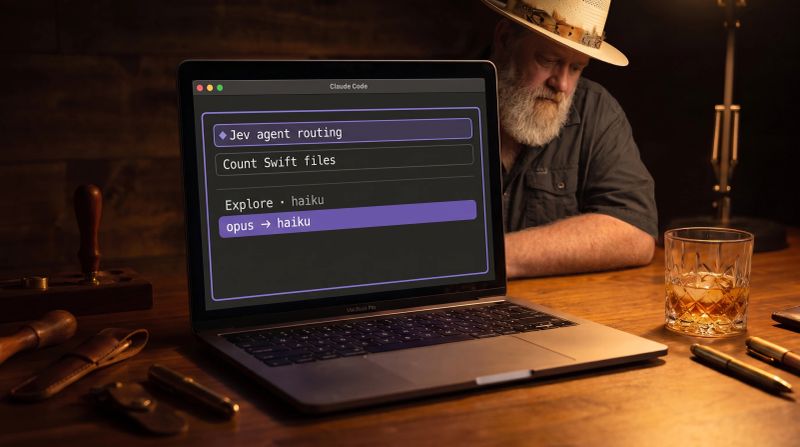
My Claude Code mod lets Jev choose the agent and model for every call
Every Claude Code subagent inherits your model, so a file count runs on Opus. I built a mod that asks Jev to pick the cheapest model that can do each job. Lookups got 51% cheaper.

I never remember to send my newsletter, so BlackOps sends it now
My last newsletter went out August 19. So I built Newsletter Autopilot: if I miss my deadline, BlackOps writes the issue from what I published and tells you it's covering for me.