
The Future of Writing Is AI-Assisted. Not AI-Generated
That's not a subtle difference — it's why BlackOps exists

I am certain that AI writing assistance is going to be the norm soon. There is no reason to write by hand anymore, at least not in the way most of us think about writing.
When I can get my basic thoughts across quickly, then let an AI turn that into a polished final post, why on earth would I spend hours writing the entire thing myself?
That is the core shift I am noticing in how I approach writing, and I do not think I am going back.
The thing that has changed is not that I suddenly have more ideas. It is that the cost of turning those ideas into something readable has dropped dramatically.
Instead of:
sitting down to outline,
writing a full draft,
revising that draft,
polishing it for publication,
I can now:
Capture the core idea in rough form.
Let AI help shape it into a complete, coherent post.
The key is that I only have to do the first part. I get my basic thoughts out quickly, without obsessing over wording, structure, or flow. The AI can handle that part.
Once that is possible, the question becomes obvious: why would I go back to doing all of it by hand?
Why "Writing By Hand" Stops Making Sense
When I say there is no reason to write by hand, I am not talking about never touching a keyboard again. I am talking about the old model where you personally craft every sentence from scratch, manually shape every paragraph, and handle all the polishing yourself.
If I can:
capture the main idea,
express the direction and tone I want,
and then let AI handle the heavy lifting of structure and polish,
then spending hours on a full hand-written draft starts to feel wasteful.
It is not that human thinking disappears. The ideas still come from me. The perspective is still mine. The intent is still mine. What changes is how much time I spend wrestling with the mechanics of turning those ideas into a finished, publishable piece.
Once that bottleneck is gone, it is hard to argue for going back.
What Changes For Writers
This shift reframes what it means to "write."
Writing starts to look more like:
capturing intent,
shaping arguments at a high level,
steering tone and emphasis,
instead of being primarily about crafting each sentence manually.
For me, that looks like:
jotting down a raw prompt or a few rough paragraphs,
clarifying what I am trying to say,
then letting AI expand, organize, and polish.
The work I care about is getting the thoughts right. The work I do not feel a need to own anymore is the final wordsmithing.
If AI can take a messy seed of an idea and grow it into a full post, and it reads like something I would have written on my best day, I do not see a compelling reason to insist on doing all that handwork myself.
Why This Matters Most For Busy Founders, Executives, And Builders
Here's an example of how you could frame it:
Open with their real constraint:
Point out that their bottleneck is almost never ideas, it is time and context switching.
You might echo your earlier line about the cost of turning ideas into something readable dropping dramatically, and note that this cost was especially painful for them.
Highlight their leverage:
Suggest that every memo, update, or post they ship has outsized impact: on hiring, fundraising, internal alignment, and market trust.
Emphasize that a lot of their thinking currently stays trapped in notebooks, DMs, or half-written docs because it is too expensive (in time/energy) to turn into finished writing.
Connect AI assistance to that leverage:
Contrast the old pattern (they need a long, uninterrupted block to draft from scratch) with a new pattern where they spend 10 to 15 minutes capturing raw thoughts and let AI do the heavy lifting.
Stress that this turns "I should write this up someday" into a repeatable habit: capture intent quickly, review and steer, then hit publish or share internally.
Spell out outcomes:
More frequent, higher-quality public writing without crowding out core responsibilities.
Clearer internal communication because strategy and decisions get written down and shared instead of being stuck in their heads.
The ability to "scale their judgment" by turning private reasoning into reusable artifacts for their team, investors, and customers.
Tie it back to your core question:
You could close by reframing your thesis specifically for them: if their edge is their thinking and judgment, why spend their scarcest resource, time, on mechanical drafting, instead of on capturing and refining the thinking itself?
The New Default
This is why I am convinced that AI writing assistance is going to be the norm.
Once you have experienced how fast it is to go from "basic thoughts" to "finished post," the old way feels slow and unnecessary. Not in a theoretical sense, but in a very practical, day-to-day way.
At that point, the idea of writing an entire post by hand stops feeling like a badge of honor and starts feeling like a strange use of time.
So I keep coming back to the same simple question that sits under all of this:
If I can get my ideas out quickly, and AI can reliably turn them into a polished piece of writing that reflects what I meant to say, why would I choose to do all of that by hand?
I got tired of that question having no good answer. So I built one.
BlackOps Center is the system I use to go from raw thought to published post. AI-assisted, not AI-generated. That difference is the whole point. Check it out.
This post came out of a Brain.
Talk through what you already know. BlackOps turns it into a structured knowledge base, then writes and publishes from it, to your own domain, X, LinkedIn, Threads, and your newsletter. No email until you have seen your Brain.
I wrote this post inside BlackOps, my content operating system for thinking, drafting, and refining ideas — with AI assistance.
If you want the behind-the-scenes updates and weekly insights, subscribe to the newsletter.
Related Posts
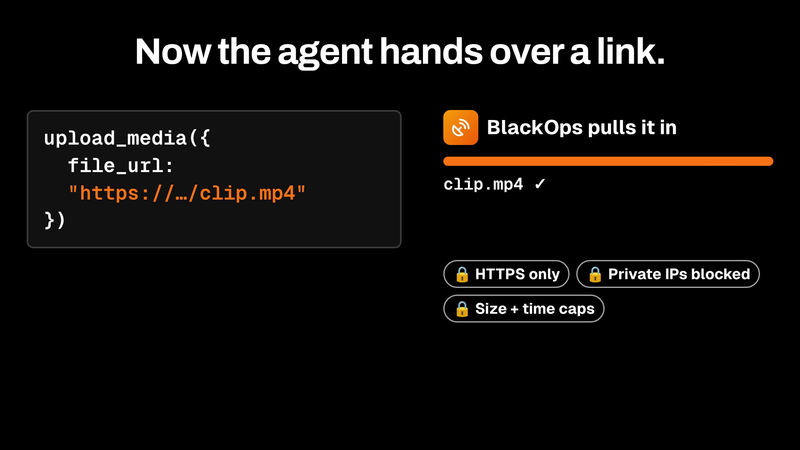
My agents upload their own media to BlackOps now
Agents can now hand BlackOps a link to an image or video, and BlackOps pulls it in and returns an ID that attaches straight to a tweet or post.
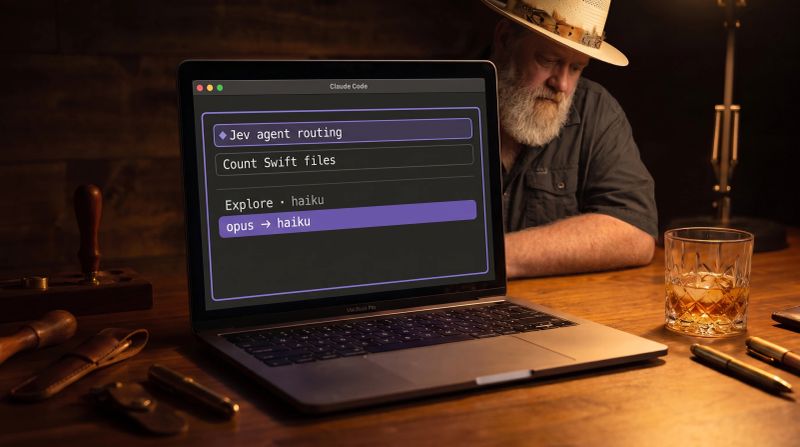
My Claude Code mod lets Jev choose the agent and model for every call
Every Claude Code subagent inherits your model, so a file count runs on Opus. I built a mod that asks Jev to pick the cheapest model that can do each job. Lookups got 51% cheaper.

I never remember to send my newsletter, so BlackOps sends it now
My last newsletter went out August 19. So I built Newsletter Autopilot: if I miss my deadline, BlackOps writes the issue from what I published and tells you it's covering for me.