
Claude Code Is Not Your Project Manager. The Artifacts Are.
A markdown file got me started. Infrastructure is what it became.
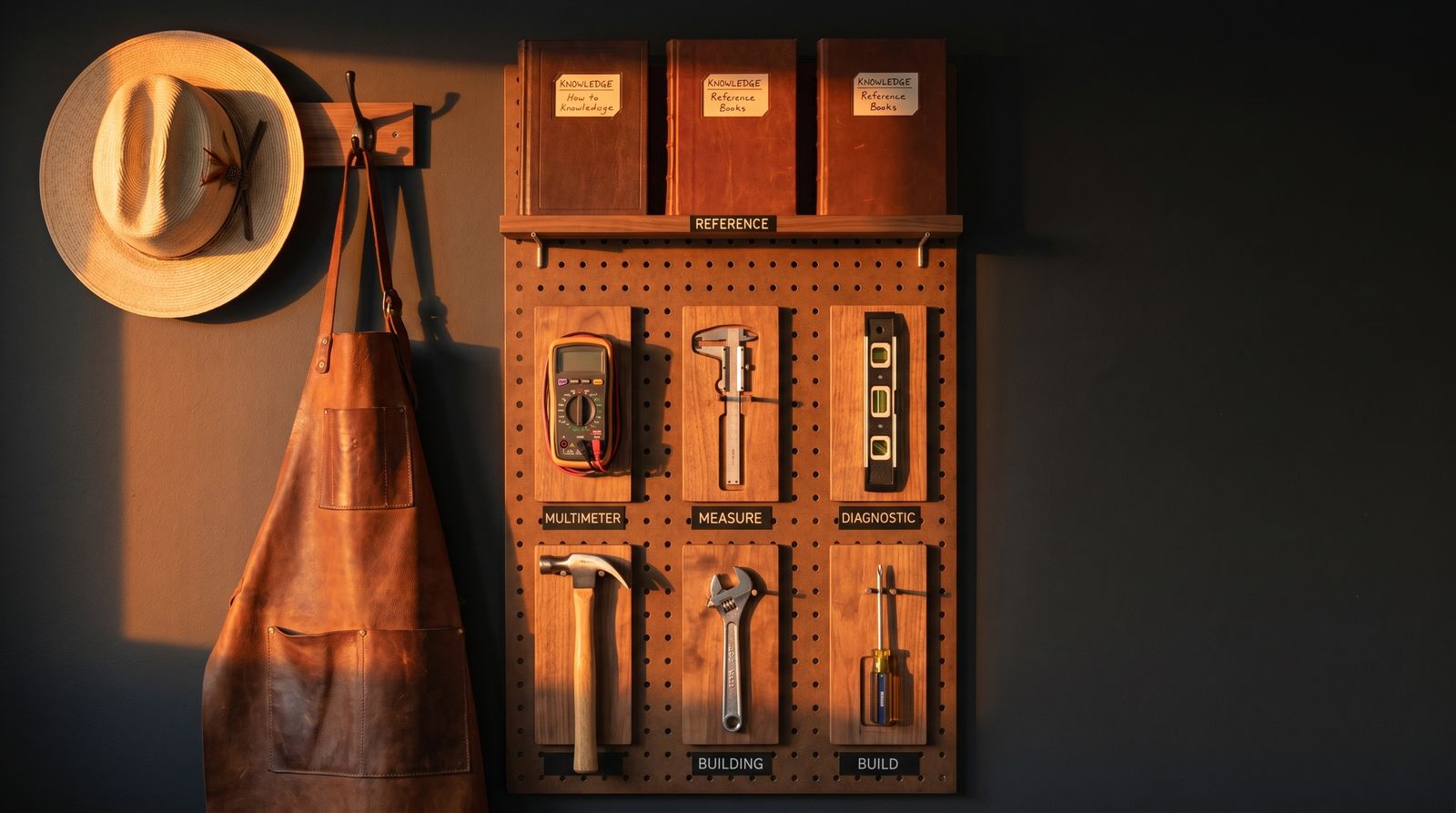
A year ago I wrote a post called Claude Code Is More Than a Dev Assistant. It's My Project Manager. The thesis was simple. Give Claude a ROADMAP.md, give it a CLAUDE.md with instructions on how to maintain it, and you get an AI that preserves context across sessions and actually makes progress on your personal projects.
That post still ranks. People still find it. It is also wildly out of date.
A markdown file is where I started. It is not where I ended up. The system I run today has Claude managing a living knowledge base, filing its own bugs, and pitching its own features. All of it lives in BlackOps, the platform I built to run my own content and product operations. The markdown roadmap was step one. Steps two, three, and four are what shipped in the year since.
This is the upgrade path.
What changed: Claude got infrastructure
The original post described a workflow. Claude reads a file. Claude updates a file. The file gets you back into context faster.
That works. It also has a ceiling. A single markdown file is fine until your project has more than one moving part. The moment you have a brand, a product, a backlog, and a bug list, the single-file approach breaks. Either the file balloons into something Claude can't actually use, or you split it into ten files and lose the central nervous system the original post was built around.
The fix is not a bigger file. The fix is replacing the file with infrastructure.
Here is what runs now, all of it through BlackOps:
- Brain — a living knowledge base that compiles itself from a folder of notes and is readable from every agent surface I use. I wrote about it when I shipped it: Stop Giving Claude a Static Doc. Give It a Brain. The ROADMAP.md got replaced by something agents can actually query.
- A bug logger that turns "this is broken" in a chat into a structured note that another agent can find and fix.
- A feature logger that captures every "we should build" thought as a properly tagged idea, so the backlog isn't a graveyard of voice memos and screenshots.
Each one started as a frustration with the original system. The roadmap file was great until I had architecture decisions, capability inventory, customer context, and ongoing technical decisions that all needed to be in the room at the same time. So I built Brain. Brain was great until I started shipping bugs faster than I could remember to log them. So I built the bug logger. And the bug logger was great until I realized I had the same problem with feature ideas, which were dying in my Apple Notes graveyard.
Each layer fixed the failure mode of the previous one. Each one shipped as a BlackOps feature.
The pattern that connects all three
Read closely, because this is the entire thesis.
Every one of these tools follows the same shape. A conversation produces a structured artifact. The artifact lives somewhere queryable. Another agent, in another session, can find it and act on it.
That is it. That is the whole system.
Brain takes "add this to the brain" in a chat and produces a compiled note plus manifest in an Obsidian folder. Any agent in any future session calls get_brain() through the BlackOps MCP and has the full knowledge in context. The bug logger takes "403 on post_tweets_reply" and produces a note tagged [bug, blackops]. The bug-fixer skill queries that tag later and ships a pull request. The feature logger takes "we should build X" and produces a note tagged [feature, blackops]. Brain compiles it. The next agent reading the roadmap pitches it back.
One pattern. Three implementations. Same loop.
Claude is not a project manager because it reads markdown. Claude is a project manager because the artifacts I produce while talking to it are durable, structured, and discoverable by the next agent in line. Brain exposes a get_brain tool. The bug log has a tag-filtered query. The feature log has the same. The original ROADMAP.md post was reaching for this pattern. It just only had one file to work with.
The artifact is the unit of work. The conversation is the interface. The agent is the worker. None of those three things are new on their own. The combination is what makes the system go. BlackOps is what holds the combination together.
What you should take from this
If you're still treating Claude like a smarter autocomplete, you are leaving the system on the table.
The shift is from "Claude as a tool that helps me with the current task" to "Claude as an operator working on top of artifacts I produce while talking to it." The artifacts outlive the conversation. They get found, queried, and acted on by the next session. You build the brain once and every conversation gets smarter for free.
You do not need my exact setup. You need three things. A place where structured artifacts live. A way for agents to find them. The discipline to use the conversation as a capture interface, not a one-shot question box.
And the lower the friction on that capture interface, the more you actually use it. These days I brief the agent out loud instead of typing. Talking a spec is closer to briefing a person than writing one.
Start with the living knowledge base. Stop Giving Claude a Static Doc. Give It a Brain. is the post that walks you through Brain inside BlackOps. The bug and feature loggers follow the same shape once you have that foundation.
The original roadmap post still has the entry-level version of the idea if you want the origin story. Everything above is what it grew into.
Have artifacts (brain, bugs, features) replaced the chat as your source of truth?
Reply on the X thread below. I read them.
💌 Want more insights like this?
Subscribe to my newsletter for weekly deep dives into frontend development, AI, and productivity.
This post came out of a Brain.
Talk through what you already know. BlackOps turns it into a structured knowledge base, then writes and publishes from it, to your own domain, X, LinkedIn, Threads, and your newsletter. No email until you have seen your Brain.
I wrote this post inside BlackOps, my content operating system for thinking, drafting, and refining ideas — with AI assistance.
If you want the behind-the-scenes updates and weekly insights, subscribe to the newsletter.
Related Posts

I Spent Years Automating My Obsidian Daily Note. Now It Files Itself.
For years I fed my Obsidian daily note by hand. Now an agent files my captures overnight, tells my thoughts from my tasks, and I wake up to a clear picture of what's next.
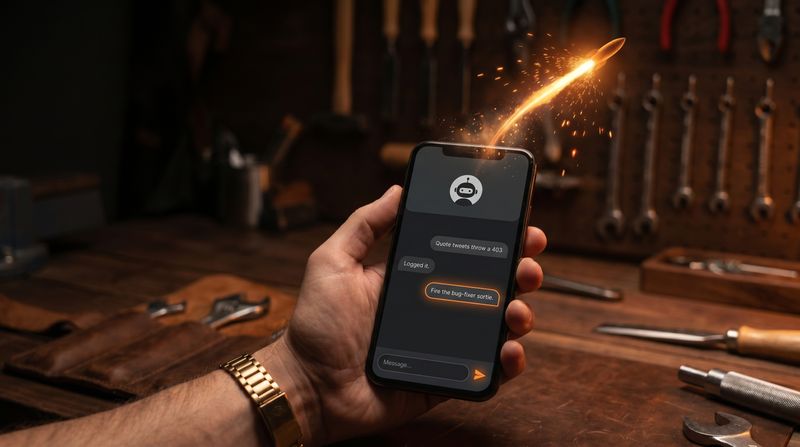
Sorties: Fire Real Actions Straight From Your AI Chat
A Sortie turns a sentence in your AI chat into a real action. Fix a bug, message your team, fire an automation. Set it up once, fire it by name from anywhere, and your keys never touch the conversation.

I Watched a YouTube Video. Claude Wrote This Post.
I didn't open a second tab. I didn't copy-paste anything. I had a thought, told Claude, and this post landed in my BlackOps queue. Here's exactly what happened.