
Personal Second Brains Are Step One. Operational Second Brains Are The Actual Destination.

Every few months a new "second brain" build hits X. Folder structure. Capture skill. Connection skill. Brief skill. Write skill. Run them in order. Compound forever.
The latest one is JARVIS, posted by DamiDefi this week. Before that it was OpenAugi. Before that it was the Karpathy LLM Wiki pattern. Before that it was a hundred Notion templates and Tiago Forte's PARA method dressed up in different fonts.
The pattern is real. The folder taxonomies are getting sharper. Organizing captures by note type instead of topic, so a psychology note and a content-strategy note collide in the same folder, is a genuinely good call. Bookmarks-per-impression as the right signal, not raw reach, is correct. Writing the closer before the middle is correct.
But every one of these systems stops in the same place.
They stop at a markdown file.
The "skill" is a paragraph in a config file. The "performance loop" is the human pasting impression numbers into a note once a month and asking Claude to look at them. The output of "write content" is a draft saved next to the brief. What happens after that is not in the system. What happens after that is the human opens X and pastes.
That's a personal second brain. It compounds the thinking of one person for the consumption of one person. Useful. Real. Worth doing.
It is not the destination.
The wall between personal and operational
The wall is not capacity. You can scale the personal pattern to a bigger vault, more captures, more skills. The wall is what the system can act on without you.
A personal second brain helps you think. An operational second brain runs a business.
The difference shows up in five places.
Brand voice as a structured object, not a paragraph. In a personal system, voice lives as instructions inside a CLAUDE.md file. Every change is a manual edit. There's no API to query it, no way to patch a single rule conversationally, no way for any other process to read it. In an operational system, voice is a first-class entity. Tone, style rules, content bias, CTA preferences. All queryable. All patchable. All available to every agent and every publishing surface.
Ingestion that runs without you. A personal vault captures what you type into it. An operational system monitors. Hacker News, Reddit, YouTube channels, RSS feeds, X searches. All flowing into a knowledge reservoir on a schedule. You don't capture the Karpathy moment. The system surfaces it and you decide what to do with it. The compounding doesn't depend on your discipline.
Knowledge as a queryable graph, not a folder tree. Folders are filing cabinets even when an LLM can read them. A real knowledge layer compiles your thinking into something with stable IDs, semantic search, traversable relationships, and queryable metadata. Recursive folder compilation into a brain that any agent can pull from with one tool call. Your Obsidian vault stays as the editing surface. The brain is what other systems consume.
Publishing as a durable entity, not a draft in a folder. In the personal pattern, "write content" produces a markdown file. Then nothing. In an operational pattern, that draft is a record. It has a status, a schedule, attached media, a target site, a campaign relationship. You can patch it, schedule it, post it, quote-tweet from it, build a thread off it, schedule three variations across three accounts, and track which one performed. The content object is alive after it's written.
Performance data flowing back automatically. GA4 traffic, GSC search performance, post impressions. All flowing into the same system that wrote the content. The personal pattern asks you to copy-paste numbers into a note once a month. The operational pattern reads the numbers itself and tells you what changed.
These aren't theoretical features. They're what separates "I have a clever Claude Code project" from "I have infrastructure that runs a business while I'm asleep."
What an operational second brain actually does
I built mine because the math required it.
Personal productivity wasn't the constraint. The constraint was shipping content across multiple properties, on schedule, in voice, without me being the bottleneck on every word.
The system has to do five things the personal pattern can't.
It has to publish. Not draft. Publish. To a real CMS, on a real schedule, with a real hero image, with UTM parameters automatically appended to every link, with the right account selected for the right channel.
It has to maintain voice across surfaces. The same brand voice rendering through a blog post, a LinkedIn carousel, a Threads campaign, an X thread, and a LinkedIn long-form. Not five different prompts. One voice object, queried by every surface.
It has to know what's happening in the world without me looking. Reservoirs monitoring sources I care about. New items surfaced. Old items archivable. The intake never stops because I went on vacation.
It has to give me one conversation that produces a campaign. Idea hits in a Claude chat. Brand voice fetched. Thread drafted. Blog post drafted. Scheduled across accounts. UTM parameters applied. All in one thread, all without leaving the conversation. I don't move from tool to tool. The tools come to the conversation.
It has to compound on real data. Not impression counts pasted from a dashboard. GA4 site comparisons. GSC query performance. Top pages by bounce rate. Real numbers reading themselves into the system that's producing the content.
This is what BlackOps is. It's not a content tool. It's an authority engine. A multi-tenant SaaS that gives one operator the leverage of a content team with infrastructure that holds voice, ingests the world, and ships across properties.
Why the personal pattern still matters
I'm not dismissing what DamiDefi, bitsofchris, AgriciDaniel, and the rest of this wave are building. Personal second brains are the on-ramp. They teach the patterns. Folder taxonomy. Skill files. CLAUDE.md as the source of truth. The performance loop as the thing that makes a system compound instead of just retrieve.
Every operational system carries the DNA of a personal one. You don't skip the on-ramp.
But the personal version compounds your thinking. The operational version compounds a business.
If you're building the personal one, build it. It's worth it. Then ask the next question.
What if the same architecture had to publish?
What if the brand voice had to render across four properties, in five formats, on schedule, without you?
What if the performance data flowed back without you ever opening a dashboard?
What if you could run the entire pipeline from one conversation?
That's the operational layer. That's where the wall is. That's what BlackOps is built to be.
The filing cabinet that talks back is step one. The machine that ships while you wear a cowboy hat in a hotel lobby in Osaka is the actual destination.
Is yours a personal scrapbook or something that can run work? What would have to be true for it to publish without you?
Reply on the X thread below. I read them.
I wrote this post inside BlackOps, my content operating system for thinking, drafting, and refining ideas — with AI assistance.
If you want the behind-the-scenes updates and weekly insights, subscribe to the newsletter.
Related Posts

I Spent Years Automating My Obsidian Daily Note. Now It Files Itself.
For years I fed my Obsidian daily note by hand. Now an agent files my captures overnight, tells my thoughts from my tasks, and I wake up to a clear picture of what's next.
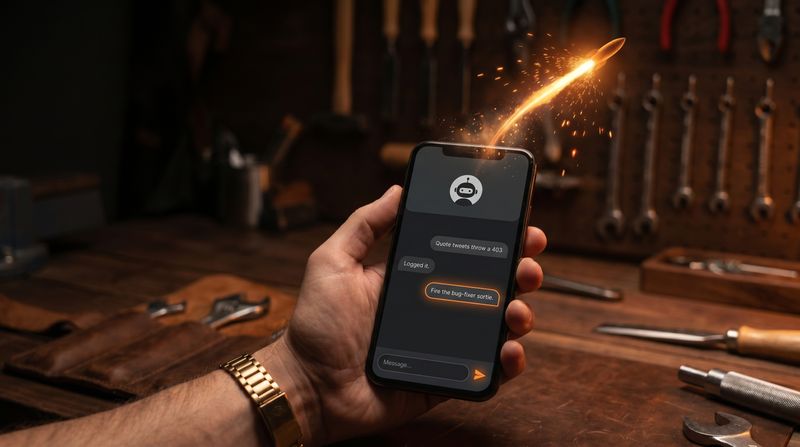
Sorties: Fire Real Actions Straight From Your AI Chat
A Sortie turns a sentence in your AI chat into a real action. Fix a bug, message your team, fire an automation. Set it up once, fire it by name from anywhere, and your keys never touch the conversation.
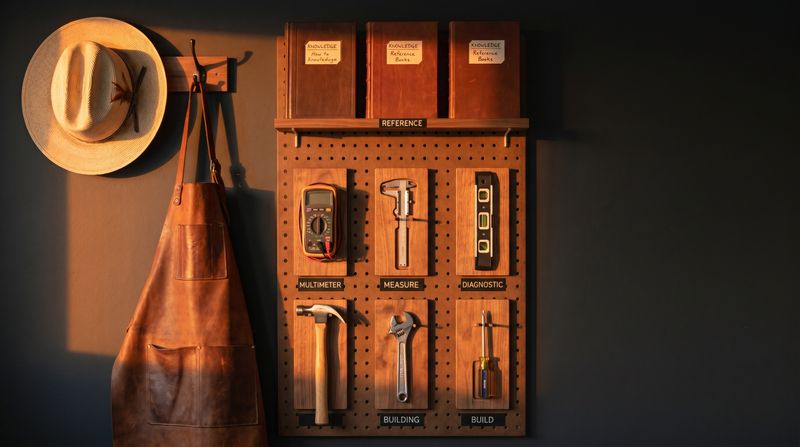
Claude Code Is Not Your Project Manager. The Artifacts Are.
A year ago I gave Claude a ROADMAP.md and called it my project manager. The post still ranks. The post is also out of date. Here is what Claude actually manages now.