
You Don't Have a Brand Problem. You Have a Systems Problem.
A millionaire copywriter laid out 6 psychology principles behind personal brands that convert. Every one maps to something BlackOps already does.
I watched a video by Joanna Wiebe this week. She is the conversion copywriter behind some of the biggest personal brands doing real money online. If you want to watch it yourself before reading: The Psychology of Creating a Personal Brand That Makes Millions.
She lays out six principles that separate the 1% who build audiences that actually convert from the rest who post into the void. I want to walk through all six because they map almost exactly to what I have been building with BlackOps Center.
Not as a planned thing. As validation that the problems I was trying to solve are the real ones.
The 6 principles — click each to see how BlackOps solves it
The principle
Most creators engineer reasons to hide. Beyonce uses "Sasha Fierce" as a permission slip to perform. You need a container that makes showing up structural, not optional.
How BlackOps solves it
Your brand brain, voice rules, and draft pipeline create the container. Showing up is a system action, not a mood. When drafting is frictionless, you show up by default.
The principle
Cody Sanchez didn't build on "investing." She built on buying boring businesses the boring way. Ruthless specificity is what makes someone unmissable.
How BlackOps solves it
Your positioning and audience definition live in the brand brain. Every draft session loads it. You can't drift from your lane because your lane is in the room every time you write.
The principle
A 1987 study found tribes form around a prototype who embodies the ideal member. Day-in-the-life and build-in-public content works because followers model your habits and rhythm.
How BlackOps solves it
BlackOps tracks your build-in-public log, draft history, and publishing cadence. You are not trying to remember what you shipped or why. The record exists.
The principle
Trade school creators teach the how. Church creators teach you how to see the world. The how-to creator competes on usefulness forever. The worldview creator builds belief.
How BlackOps solves it
The AI context pack and brand brain load your existing frameworks before you write. You are never starting from zero. Producing at the level of judgment is sustainable when the system holds the memory.
The principle
Negative emotions drive more engagement. Positive emotions drive more purchases. Most creators optimize the whole funnel for clicks and wonder why the audience never converts.
How BlackOps solves it
The content-to-revenue funnel is structural. Awareness posts can be provocative. The blog builds confidence. The product page is where belief converts. Each layer has a different emotional job.
The principle
Your visual signature fires faster than language. Without a reference, most creators drift. The visual becomes whoever designed the last post.
How BlackOps solves it
Visual identity guidelines live in the brand brain alongside voice and positioning. Every content session has access to the same reference. The look does not drift because the rules travel with you.
Principle 1: You need a permission structure to show up
Joanna's first principle is that fear of visibility is the silent killer. Most people engineer reasons to hide. Her fix is an alter ego. Beyonce calls hers Sasha Fierce. You don't have to name yours. You just need a version of yourself that has permission to say the thing.
For me, that meant building a system around the work so creative output didn't require me to be "on." BlackOps handles the publishing, the drafting pipeline, the scheduling. When I sit down to write, I'm not also managing a CMS, hunting for my brand voice doc, or trying to remember what I posted last Tuesday.
The system creates a container. You can't show up consistently if showing up is friction. BlackOps removes the friction.
Principle 2: One superpower, not a buffet
Cody Sanchez didn't build a brand on "investing." She built it on buying boring businesses to get rich the boring way. One red thread. One unmistakable lane.
This is a knowledge problem. Most creators with something real to say get diffuse because they don't have their positioning written down somewhere they can actually reference before they publish. You drift. You hedge. You chase whatever got engagement last week.
BlackOps has a brand brain. One place where your positioning, voice rules, content pillars, and audience definition live. Before I write anything, that brain is loaded. My superpower is defined. I can't accidentally drift from my lane because my lane is in the room with me every time I write.
Principle 3: Your audience models you
A 1987 study Joanna cited found that tribes form around a prototype. Someone who embodies the ideal member. If you have a personal brand, you are the prototype. Day-in-the-life content works because followers literally model your behavior, your values, your daily rhythm.
Build-in-public is the execution of this principle. Showing the work, not just the result, is what turns followers into believers.
I post build-in-public updates every week because of this. I'm shipping BlackOps in the open. People who want to build AI-native businesses aren't reading my content just for information. They're watching how I operate. The transparency is the product.
BlackOps makes build-in-public sustainable. It tracks drafts, publishing history, and notes from the process. I'm not trying to remember what I built or why. It's already there.
Principle 4: Trade school vs. church
This is the one I'll be thinking about for a while.
Joanna separates creators into two modes. Trade school creators teach how to do the thing. Church creators teach you how to see the world. The how-to creator competes on usefulness forever. The worldview creator builds actual belief.
Judgment content beats informational content. Anyone can summarize a trend. Only you can share a decision you made and why.
The practical problem is that worldview content is harder to produce on a schedule. It requires more from you. BlackOps AI context and the brand brain exist specifically to make this easier. When I draft, I'm not starting from nothing. My existing frameworks, past posts, and positioning are already loaded. I can write at the level of judgment and worldview because the system holds the operational memory so I don't have to.
Principle 5: Positivity closes. Negativity clicks.
Joanna's research finding: negative emotions get more engagement. Positive emotions drive more purchases. She calls this the "buy happy" principle. People don't buy when they're scared or angry. They buy when they feel hope, confidence, or belonging.
Most creators optimize for the engagement metric because that's what the platform shows them. They get addicted to outrage content and wonder why the audience never converts.
The content-to-revenue funnel in BlackOps is built for this. Awareness posts on LinkedIn and X drive discovery. The blog builds authority. BlackOps Center is the product destination. Each layer has a different emotional job. Building that funnel deliberately prevents you from accidentally optimizing the whole thing for clicks when you need it to close.
Principle 6: Visual packaging is positioning
Joanna's sixth principle: a distinct, consistent visual identity is not about looking good. Your visual signature fires faster than language. People recognize you before they read a word. Most creators stay vague, and their look drifts to whoever designed the last post.
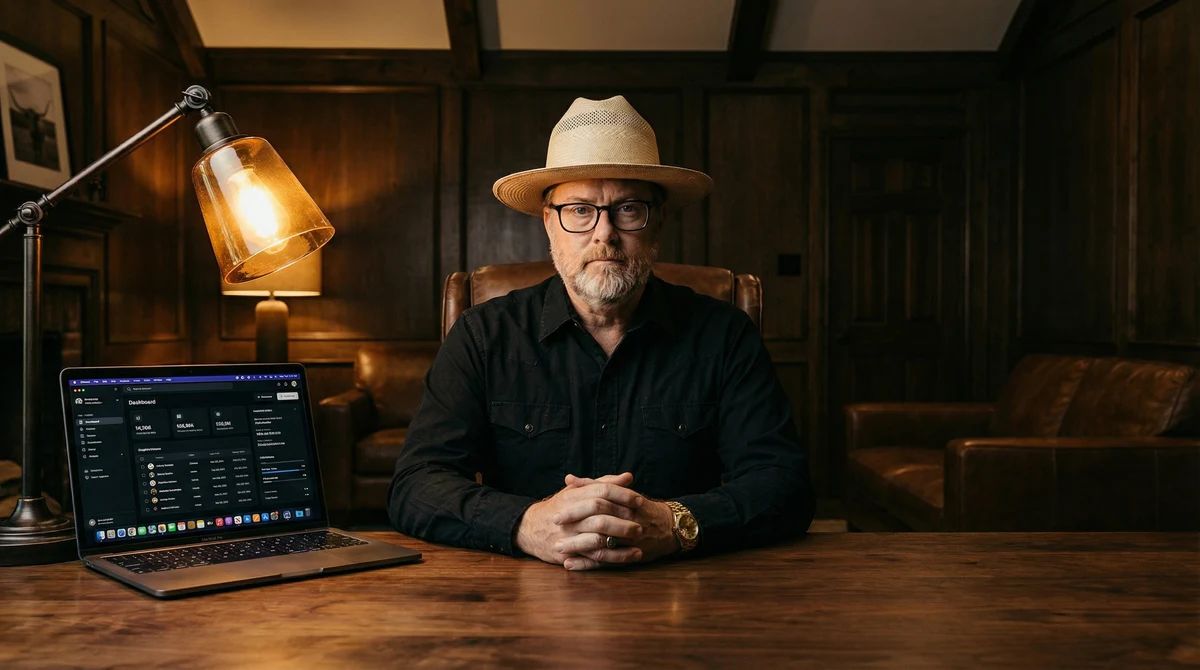
Mine is what I call Modern Western Workshop. The hat. The black shirt. Cinematic lighting. It's not a costume. It's a consistent visual language that shows up the same way every time.
BlackOps stores the visual identity guidelines alongside everything else. When I bring in a new piece of content, the reference is already there.
The thing Joanna didn't say but implied
Every one of these six principles is a systems problem.
The alter ego needs a container. The superpower needs documentation. The prototype effect needs consistent output. The worldview content needs operational memory. The funnel needs structure. The visual identity needs a reference that travels with you.
Personal branding experts focus on the psychology. They're right about the psychology. But without a system, the psychology is just something you understand and still don't do.
BlackOps Center is the system. The brain, the voice, the drafts, the publishing, the funnel. All of it in one place. AI-accelerated. Built for operators who have real work to do and can't also be full-time content managers.
I'm building it in public. If you want to watch how it works, stick around.
Want more on building AI-native workflows? Subscribe to the newsletter for weekly deep dives into frontend development, AI, and building systems that compound.
This post came out of a Brain.
Talk through what you already know. BlackOps turns it into a structured knowledge base, then writes and publishes from it, to your own domain, X, LinkedIn, Threads, and your newsletter. No email until you have seen your Brain.
I wrote this post inside BlackOps, my content operating system for thinking, drafting, and refining ideas — with AI assistance.
If you want the behind-the-scenes updates and weekly insights, subscribe to the newsletter.
Related Posts
Everyone's Fishing Off the Same Boat
Most X growth tools farm the same recycled replies. I built one that answers from your own second brain, so you sound like you, not the boat.

Fifteen Minutes From Content Idea to Published Carousel
How a content idea became a written LinkedIn post, a designed carousel, and this blog post itself, all in one 15-minute chat session.

My Workout System Is an iPhone App Now. Claude and I Built It in a Day.
Six weeks ago I wrote about logging every workout by talking to Claude. Yesterday I asked Claude to turn that system into a real iOS app. By dinner it was on TestFlight with working subscriptions. This is what actually happened, including the parts where Apple's paperwork fought back.