
Two Waves of Digital Transformation. Developers Win Both.
Every layer of automation creates a new layer of complexity that needs builders. That's been true for thirty years. It's still true now.
The Second Digital Transformation
The first one replaced paper. The second one is replacing people.
I've been in this industry for thirty years. I remember the exact moment the first digital transformation felt real. Sitting next to someone who had spent their entire career on a typewriter, guiding their hand to a mouse, watching them click for the first time. That was the early 90s. That was wave one.
We've been riding that wave for three decades. And most people don't realize it just ended.
Wave One: Paper Becomes Pixels
The first digital transformation had a simple mission: take everything that was physical and make it digital.
Invoices became PDFs. File cabinets became databases. The clipboard in the warehouse became a handheld scanner. The appointment book at the front desk became scheduling software. We moved entire industries off paper, off film, off physical media and onto computers, networks, and screens.
I built one of those early systems. A website and an internal platform designed to do one thing: eliminate paper from a business process. It felt revolutionary at the time. And it was. But the key thing to understand about wave one is who was still in the picture. People. Humans moved from typewriters to PCs, from filing cabinets to databases, from paper routes to email inboxes. The technology changed. The human in the loop stayed.
That's what made wave one feel safe, even exciting. It wasn't replacing people. It was upgrading them.
Warehouse employees got handhelds instead of clipboards. Accountants got Excel instead of ledger books. Customer service reps got CRMs instead of Rolodexes. Every single step of the transformation kept a person in the chair.
Wave one took thirty-plus years. And it's still not fully done in some corners of the world. But the shape of what's coming next is already clear.
"Every single step of wave one kept a person in the chair. Wave two is pulling that chair out."
Wave Two: People Become Processes
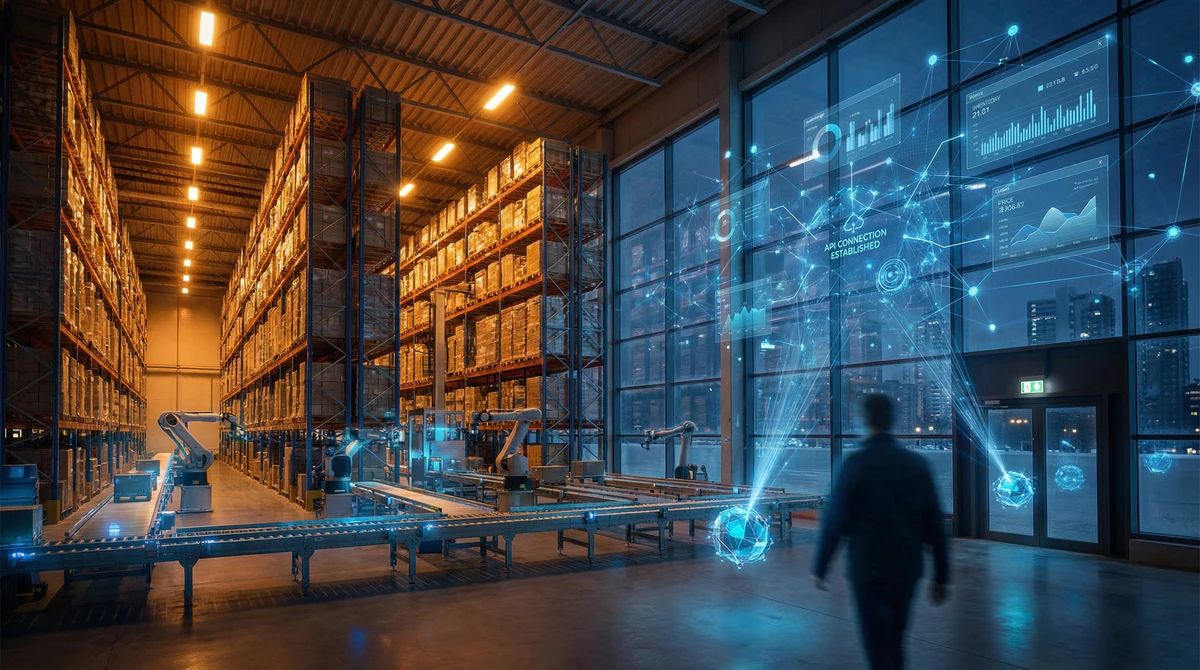
Now the warehouses are filling up with robots.
That's not a metaphor. The same industry that moved from clipboard to handheld is now pulling people out of the equation entirely. Autonomous forklifts. Robotic picking systems. The handheld was a bridge, not a destination.
And here's the uncomfortable truth: that pattern is going to repeat itself at every level of the ladder.
The call center moved from paper scripts to CRM software in wave one. Wave two takes the rep out entirely. An AI agent handles the call, checks the account, issues the refund, closes the ticket. No human required.
The back office moved from filing cabinets to document management systems in wave one. Wave two automates the entire workflow. Intake, review, routing, approval. The person who used to process those requests? Replaced by an agent.
This is the part people are starting to talk about. But there's a second half that barely anyone is discussing yet.
The Part Nobody's Talking About
We built the web for humans.
Every button, every checkout flow, every search bar, every product listing was designed for eyes, fingers, a human brain making a decision. The entire UX discipline exists to serve the person on the other side of the screen.
But look at what's happening right now. AI agents are booking travel. Comparison shopping. Scanning menus for dietary restrictions. Filing expense reports by reading receipts. Buying tickets before they sell out.
The consumer is being automated too.
"Your website's next visitor might not be a person. It might be an agent shopping on someone's behalf, reading your product specs, comparing your price against three competitors, and making a purchase decision. All in seconds. No human ever opened a browser tab."
We're not just removing the human from the back office. We're removing them from the front door.
The implications of that are massive and largely unexamined. SEO was built around how humans search. UX was built around how humans navigate. Conversion optimization was built around how humans hesitate. What happens to all of that when the "user" is a bot with perfect recall, zero emotional response, and a task to complete?
The Developer's Role in All of This
Here's where I want to push back on the doom narrative.
Somebody has to build all of this.
Wave one created an enormous amount of work for developers. Every paper process that went digital needed software. Every software system that moved to the web needed engineering. That work lasted thirty years and it's still going. Wave two is not going to be different. If anything, it's going to need more builders, not fewer.
Yes, AI will help write the code. It already does. I use Claude Code every day and it's changed how I work completely. But there's still a brain behind it. There's still someone who understands the problem, defines the system, makes the architectural decisions, catches what the model gets wrong, and ships the thing.
The robots didn't eliminate warehouse managers. They changed what warehouse managers do. The same thing is going to happen to developers. The ones who adapt, who learn to work with AI as a force multiplier rather than fight it as a threat, are going to be extraordinarily productive. The demand for systems to build, automate, integrate, and maintain is only going to grow.
"Wave one kept developers busy for thirty years. Wave two is going to keep us busy for at least twenty more."
What This Means Right Now
If you're building software today, here's what I think is worth sitting with.
The user you're designing for might not be human. Build APIs that agents can navigate, not just UIs that humans can click. Structure your data for machine consumption, not just human readability.
The processes you're automating aren't done yet. Every handheld in every warehouse is a stepping stone. Every software system that still has a human approving something in the middle is a target for the next wave. If you're building for businesses, build with that in mind.
And if you're a developer worried about your career: be curious instead. The single most valuable thing you can do right now is understand what these agents can and can't do, and start building the systems that orchestrate them.
We're at the beginning of wave two. The work is just getting started.
I've been building on the web since the mid-90s, from teaching people how to use a mouse to shipping AI-powered products today.
This post came out of a Brain.
Talk through what you already know. BlackOps turns it into a structured knowledge base, then writes and publishes from it, to your own domain, X, LinkedIn, Threads, and your newsletter. No email until you have seen your Brain.
I wrote this post inside BlackOps, my content operating system for thinking, drafting, and refining ideas — with AI assistance.
If you want the behind-the-scenes updates and weekly insights, subscribe to the newsletter.
Related Posts
Renaissance Painters Who Lived to See Photoshop
Those of us who learned web development by hand are Renaissance painters who lived long enough to see computer paint programs. AI did that to web development in a couple of years, and it changes who gets to commission the work.
They Booed AI at Graduation. I Get It. They're Still Wrong.
A room full of arts and humanities graduates booed a speaker for mentioning AI. Their fear is legitimate. Their response is the exact thing that will accelerate the outcome they're afraid of.
Coinbase Founder Just Validated What I've Been Saying for Months
Brian Armstrong announced one-person teams running fleets of AI agents. I wrote about this model months ago. The only difference is he's calling it a pivot. I've been living it.