Why Travel Unlocks My Best Ideas
How Hospitality, Not Hustle, Became My Creative Operating System
Why Hotels and Travel Unlock My Best Ideas
There is something about being in motion that flips a switch in my brain.
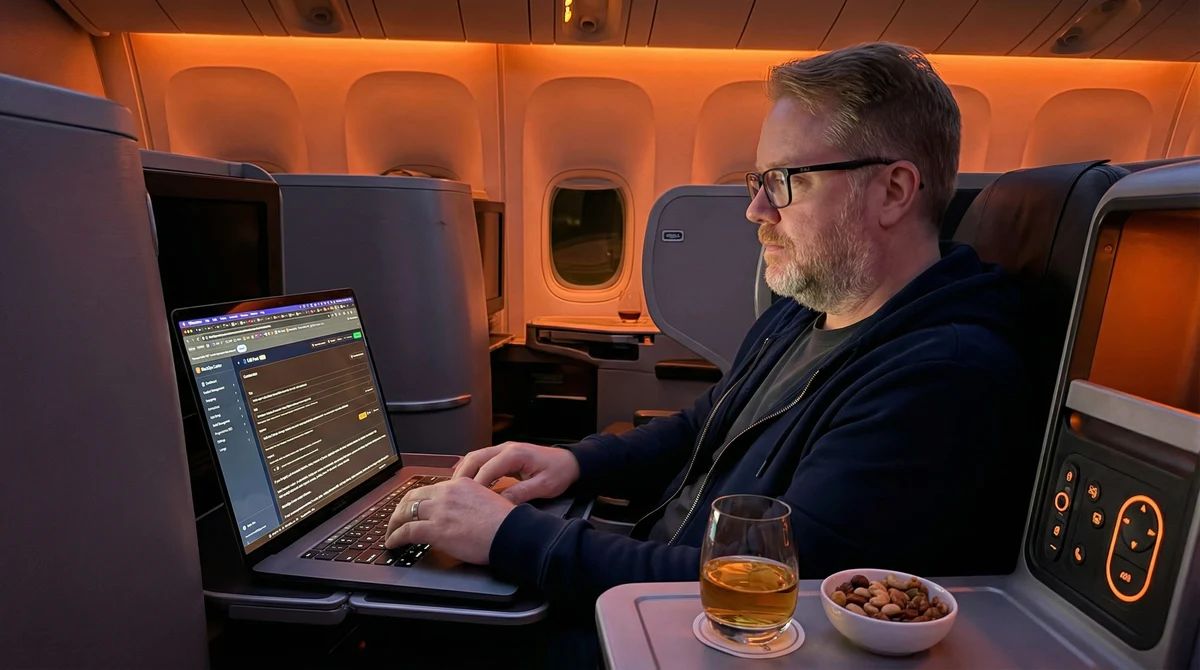
Put me on a plane with nowhere to go. Trap me in a car for a few hours. Drop me into a quiet hotel room with neutral walls and unfamiliar sounds. My mind opens up. Ideas stack up faster than I can capture them.
This isn’t new for me. It has been happening for years. But only recently did I stop and think about why.
VoiceCommit came from this exact state. And today, on another staycation, I used it again and again to kick off three new features for BlackOps before the day even got started.
I don’t think it’s accidental.
I think it has everything to do with hospitality.
Travel Removes the Noise That Pretends to Be Productivity
At home, my brain is constantly doing background work.
What emails I should answer.
What task I am avoiding.
What I should be doing instead of thinking.
That low-level noise feels productive, but it blocks creative momentum.
When I travel, or even fake it with a staycation, that noise drops away. Decisions are made for me. The bed is made. Food is handled. The environment stops asking questions.
That’s when ideas feel safe enough to show up.
Not forced ideas. Not “sit down and be creative” ideas.
The kind that arrive fully formed because nothing is interrupting them.
Hospitality Is an Invisible Design Discipline
I have always been drawn to hospitality, long before I connected it to product design.
Years ago, I read The Disney Way and similar books about how Disney trained cast members to make every interaction intentional. Not flashy. Not performative. Just thoughtful. Someone notices you are lost and helps before you ask.
That philosophy stuck with me.
Later, I discovered Danny Meyer and read Setting the Table. The lessons were not really about food. They were about how hospitality works when it is done right. How guests feel when the system disappears and they are simply cared for.
More recently, Unreasonable Hospitality brought that idea forward again. The obsession with details. Going beyond expectations. Creating moments people never forget. That mindset also helped inspire The Bear, a show that captured the intensity, care, and chaos behind delivering exceptional experiences.
Good hospitality is invisible.
Bad hospitality is unforgettable.
Why Ideas Show Up When I’m Away
When I am in a hotel, I am a guest inside a well-designed system.
The room does not explain itself. It just works.
The lighting is right.
The space is neutral and calm.
That same environment is exactly what my creativity needs.
No friction.
No setup cost.
No guilt about not doing enough.
Just space.
That is when one idea leads to another, and suddenly I am recording notes, connecting dots, and thinking clearly again.
VoiceCommit Was a Hospitality Decision
VoiceCommit exists because I kept losing ideas in these moments.
Walking through an airport.
Lying in a hotel bed.
Sitting alone with momentum and no keyboard.
Typing felt like friction. Notes apps felt cold. By the time I got back to my desk, the spark was gone.
So I built a system where I could just talk.
No formatting.
No structure upfront.
No pressure to finish the thought.
That is hospitality for creativity.
Meet me where I am.
Do the hard work quietly in the background.
BlackOps Comes From the Same Instinct
Today, on another staycation, I used VoiceCommit to kick off three new BlackOps features before breakfast.
None of them started as polished ideas.
They started as half-formed frustrations and “what if” thoughts.
They turned into direction because the system did not fight me.
That is the same instinct Disney built into their parks.
The same instinct Danny Meyer talks about in his restaurants.
The same instinct good hotels get right when they do their job well.
Make it easier for people to show up as themselves.
Remove unnecessary effort.
Respect their energy.
I Want My Apps to Feel Like Disney-Level Magic
The more I think about it, the clearer this becomes.
I don’t want my apps to feel like tools. I want them to feel like good hospitality.
The best hotels anticipate what you need. Extra towels show up before you ask. The room is quiet in the ways that matter. Nothing calls attention to itself, but everything works.
That is the feeling I am chasing.
When someone opens one of my apps, I want it to meet them where they are. I want it to remove effort, not add steps. I want it to anticipate the moment they are in and quietly help them move forward.
That is why VoiceCommit lets you speak instead of type. That is why BlackOps tries to collapse complexity instead of exposing it. That is why I care so much about reducing friction, even when the user never notices it.
Good hospitality does not announce itself. It just makes life easier.
That is the bar I am holding myself to.
In a later post, I want to go deeper into how we design for this. How anticipation shows up in product decisions. How systems can feel thoughtful instead of demanding. How software can behave more like a great host than a clever machine.
But it all starts here.
Create space. Remove friction. Anticipate needs. And give people what they need before they know to ask.
I wrote this post inside BlackOps, my content operating system for thinking, drafting, and refining ideas — with AI assistance.
If you want the behind-the-scenes updates and weekly insights, subscribe to the newsletter.
Related Posts
The Idea That Hit Me 2,500 Miles from My Laptop (And Sparked a New Dev Tool)
How a vacation without my laptop led me to build VoiceCommit - an AI-powered voice-first tool that turns spoken commerce and development ideas into GitHub Issues, PRs, and updates.
Everything Important I Built This Year Started Away From My Desk
VoiceCommit started on a hiking trail. BlackOps features get kicked off from hotel rooms. Spotter's biggest weekend began with an email read on vacation. One year of the same pattern, with receipts.

Flying West
A Razorfish call, an Oakley project, and two and a half years of flying every other week changed how I worked—and turned me into a consultant.