
Why This Feature Shipped in Hours (And Why Most Don’t)
It wasn’t the stack. It was the architecture, planned with Claude Code.
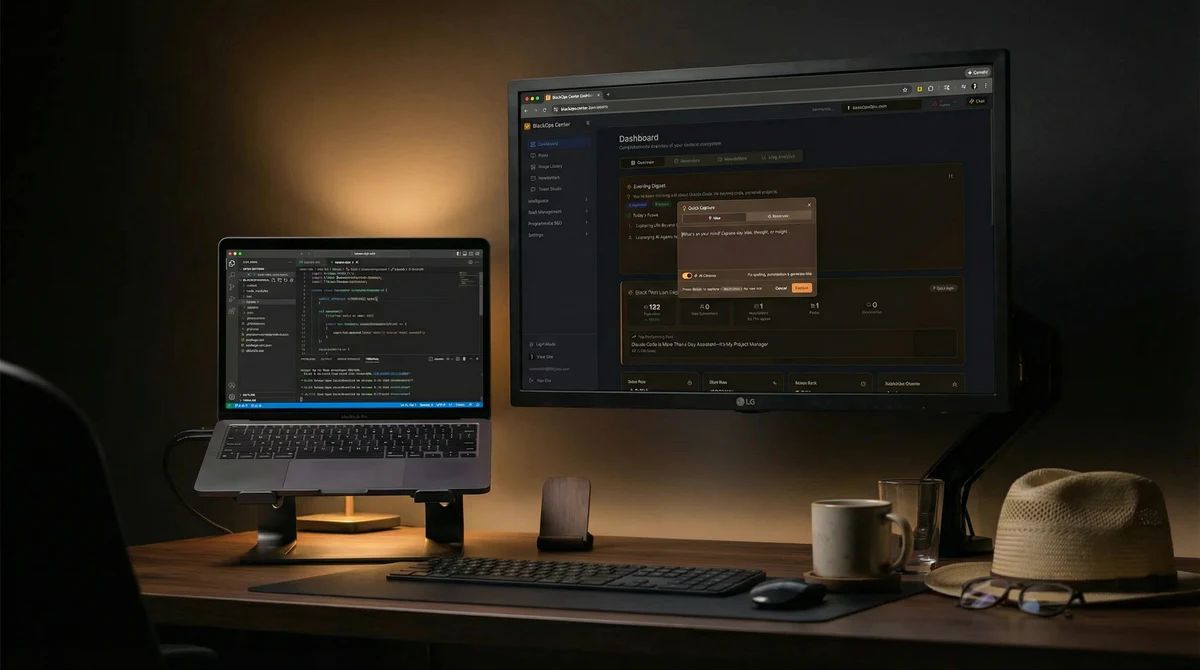
Today I watched a video about building a “second brain.”
Not because I needed another note-taking system, but because I’m always interested in how people explain systems that actually compound instead of quietly dying.
The part that stuck wasn’t the stack.
It was the loop.
A recent video from Nate B sparked that framing. Jones on building a modern “second brain” — not as a note-taking system, but as an automated loop that keeps working after capture.
Watch the video →
Capture → classify → route → surface → fix.
That loop immediately felt familiar — because most of it already existed inside BlackOps.
This also connects to a theme I’ve written about before: the biggest gains from AI don’t come from generating more output, but from reducing the friction between decisions (as I argued in Vibe Coding Isn’t the Problem — Vague Thinking Is).
This post is about how that loop mapped cleanly onto the architecture I already had, how I used Claude Code’s planning mode (not just generation) to reason through it, and how a real feature shipped in hours — not because AI “coded everything,” but because the system design was already there.
This Wasn’t a Bolt-On Feature
The important detail here is that I didn’t “add AI” to BlackOps.
BlackOps already had:
-
structured content reservoirs
-
routing and classification logic
-
confidence-aware processing
-
scheduled digests
-
human-in-the-loop correction paths
What it didn’t have was a dedicated front door for ideas — a place where raw thoughts could enter the system and immediately start compounding.
So instead of asking “How do I build this?”
I asked a more important question:
Does this idea fit the architecture I already trust?
When the answer is yes, shipping is usually the right move.
The Feature: Content Idea Inbox
The feature I added is called Content Idea Inbox.
At a high level, it does one thing well:
Capture ideas instantly, then keep working on them after you stop thinking about them.
Here’s the outcome the system is optimized for.
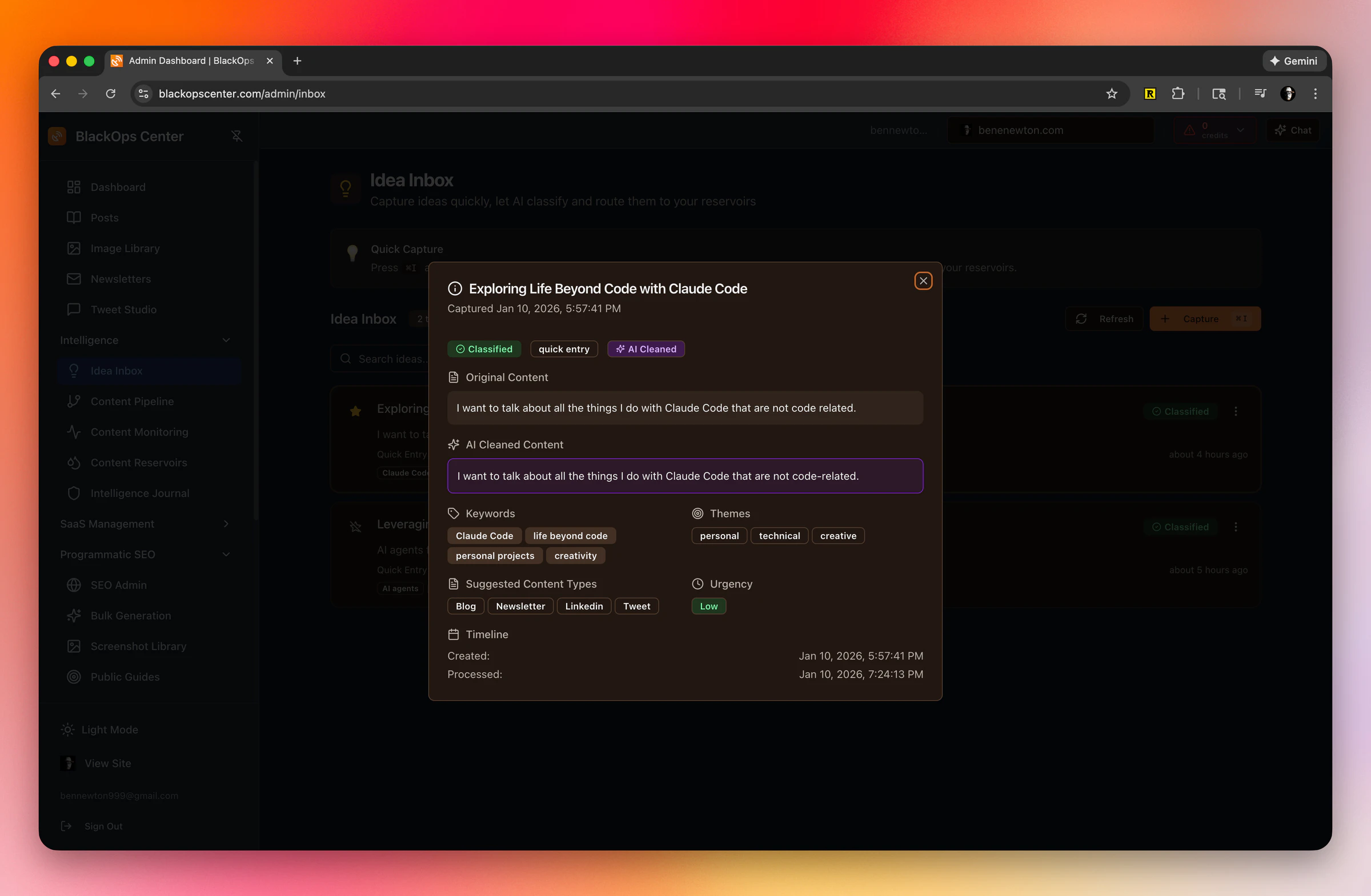
A captured idea, automatically classified, enriched, and ready to compound.
And here’s how ideas enter the system in the first place.
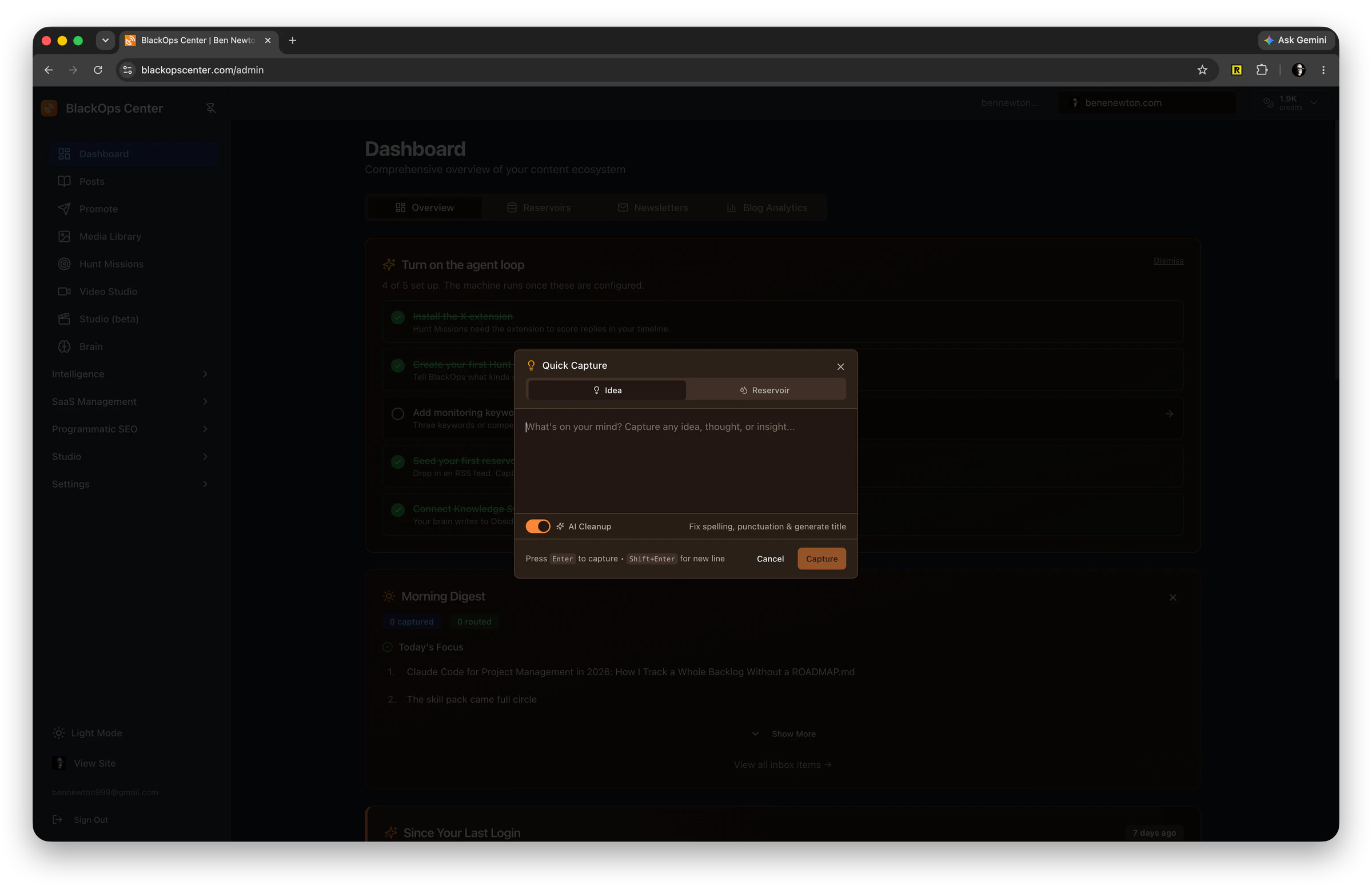
Idea Capture Modal in BlackOps
cmd-i anywhere in the app will launch the Quick Capture Modal
This isn’t about storing thoughts.
It’s about closing loops and surfacing signal.
The loop looks like this:
-
Capture
-
Global shortcut (
Cmd+I) -
No navigation
-
Raw thought, dumped instantly
-
-
Classify
-
AI generates a title and cleaned content
-
Extracts keywords, themes, urgency
-
Suggests content formats (blog, tweet, newsletter, etc.)
-
-
Route
-
Best-fit reservoir selected
-
Match score calculated
-
High-confidence ideas auto-route
-
-
Guardrails
-
Low-confidence items stop
-
Marked
needs_review -
Nothing pollutes the system silently
-
-
Surface
-
Daily digest highlights what matters today
-
Weekly review detects patterns and open loops
-
-
Fix
-
Inline corrections
-
No dashboards
-
No cleanup rituals
-
The system keeps running whether I’m motivated or not.
That’s the difference between storage and compounding.
How Claude Code Actually Fit Into This
The truth is, I didn’t start by breaking this into implementation tasks.
I spent most of the time in planning mode.
I shared with Claude Code:
-
the entire transcript of the video
-
the existing BlackOps architecture
-
how I wanted this same loop, but scoped specifically to content ideas
-
and what felt like the missing piece in the product
The goal wasn’t “build a second brain.”
It was:
Build the same loop for content — and make it work across ideas I’ve already captured, things I’ve written, and things I’ve tweeted about recently.
I wanted the system to:
-
surface ideas from existing reservoirs
-
pull signal from prior writing and tweets
-
tie thoughts together I might not have connected myself
-
identify recurring patterns in how I think
This wasn’t a coding problem yet.
It was a systems alignment problem.
Planning Is Where the Real Work Happened
Instead of jumping into code, we planned.
That planning resulted in concrete artifacts:
-
a full Inbox Digest & Notification System Plan
-
clearly defined phases (daily digest, weekly review, confidence bouncer, quick fix)
-
explicit guardrails around trust and confidence
-
and success metrics to validate behavior change
We mapped:
-
the pillars in the video’s system
-
the pillars already present in BlackOps
-
and the exact gaps between them
That’s when it became obvious:
Most of the system already existed.
What was missing wasn’t intelligence — it was a tighter feedback loop.
Specifically, the “tap on the shoulder” that turns passive storage into an active system.
Once that was clear, the feature basically designed itself.
From Plan to Feature Without Thrash
Because the planning work was done upfront:
-
there was very little rework
-
no architectural detours
-
no experimental branches that had to be ripped out
Claude wasn’t guessing what I wanted.
It already understood:
-
the mental model
-
the constraints
-
the existing data structures
-
and the intent behind the feature
Implementation became about filling in missing pieces, not inventing new ones.
Daily digests.
Weekly reviews.
Confidence thresholds.
Quick fixes.
Settings.
Each part fit naturally because the system had already been reasoned through.
That’s how this shipped in hours instead of days.
This Is the Missing Piece in BlackOps
BlackOps was already good at storing, organizing, and reusing content.
What it lacked was a system that:
-
continuously fed it new ideas
-
tied those ideas to existing work
-
and surfaced patterns over time
The Content Idea Inbox completes that loop.
It turns BlackOps from a place where content lives into a system that actively helps generate what comes next.
This Fits a Pattern I’ve Been Writing About for a While
If this feels familiar, that’s intentional.
In other posts, I’ve written about:
-
why vague thinking, not vibe coding, is the real problem (see Vibe Coding Isn’t the Problem — Vague Thinking Is)
-
why AI isn’t replacing thinking but removing drag between decisions
-
how senior developers get leverage from AI through planning, not typing faster
-
and why systems matter more than tools
This feature is just a concrete example of those ideas showing up in a product.
Nothing here required new magic.
What mattered was:
-
having a clear mental model
-
using AI as a planning partner
-
and respecting the architecture enough not to bolt things on impulsively
The video helped articulate the loop.
Claude Code helped reason through it.
But the direction was already there.
That’s usually how the good features ship.
The Bigger Takeaway
Most “second brain” tools fail because they stop at capture or storage.
Compounding starts when the system:
-
keeps working after capture
-
surfaces information at the right time
-
makes fixing mistakes trivial
-
and earns trust over time
This feature wasn’t inspired by hype.
It was validated by architecture.
When architecture, intent, and tooling finally line up, shipping gets easy.
Related Posts

The Future Dev Team: One Senior Engineer and an Army of AI Agents
Learn how Mission-Command Development lets a senior engineer direct AI agents to deliver faster, higher-quality software in 2025’s competitive tech landscape.

How I Created Mission-Command Development (The Backstory)
How a single senior developer with AI agents can replace entire development teams, transforming software delivery from slow team coordination to rapid mission command execution.

When AI Goes Off the Rails
A deep dive into managing AI agents in development teams, from initial magic to debugging hallucinations. Learn how prompt infrastructure and team guardrails are reshaping the modern developer workflow.