
I've Been Wondering About a Plane for 40+ Years. Claude Found It, and Now I'm Logging All of Them.
Claude found the exact Pan Am 747 I flew on in 1984, down to the tail number. Now I'm logging every flight in BlackOps so none of it disappears again.
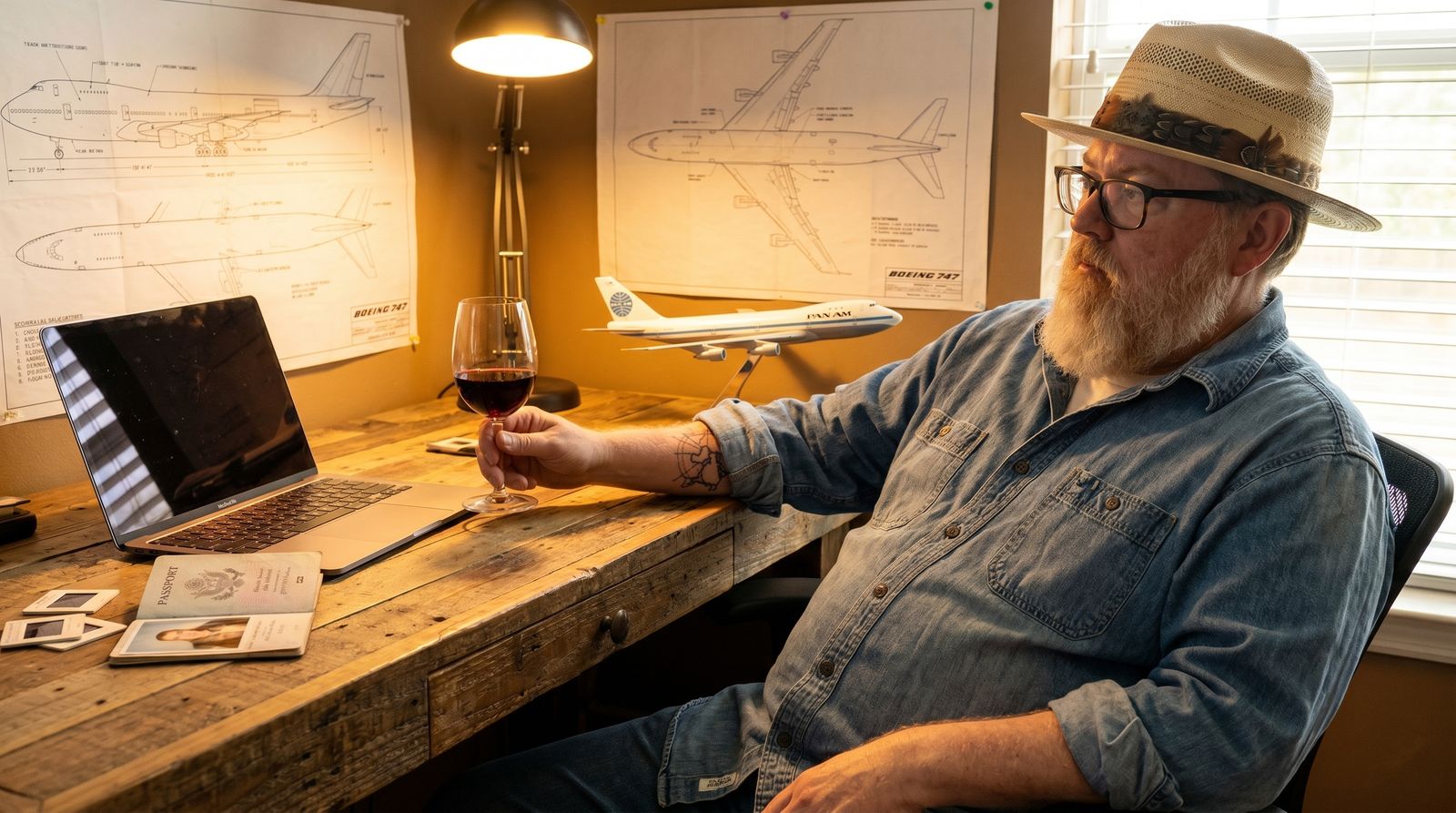
Somewhere over the Pacific in the summer of 1984, the ceiling of the first class cabin came loose.
We were in heavy turbulence. The men in the row ahead of me were drinking and laying bets on whether the next jolt would put the cocktails in their laps. Then a panel in the ceiling dropped open. A steward walked up with a broom handle, pushed the panel back into place, and held it there. No announcement. No drama. That was just flying in 1984.
I was a kid, traveling with my dad. I remembered the broom handle for forty years. What I could not remember was the one thing I wanted back: which exact airplane was that?
I have a 747 inked on my forearm now, a world map beside it. I got it because of these exact trips, 1983 and 1984, crossing the Pacific with my dad. So the question had teeth. Not "what kind of plane." I knew it was a Pan Am 747. The question was the airplane itself. The specific airframe. The tail number, if it could still be found.
Down to eleven
Here is the thing about a forty year old memory. It feels unrecoverable right up until you start deleting everything it is not.
Pan Am flew exactly eleven 747SPs. The SP was the short, long legged version Boeing built so Pan Am could cross oceans the standard 747 could not manage with a full load. In 1984, the only nonstop from Los Angeles to Tokyo was the SP, and Pan Am flew it daily. So if my flight was nonstop, and it was, the airplane was one of eleven. Not thousands. Eleven.
Then the names. Pan Am painted a name on the nose of every Clipper. Crews said it over the cabin. Passengers carried it home. When I read the list of those eleven SPs back to myself, one of them stopped me cold.
Clipper Mayflower. N530PA.
I did not recognize the registration. I recognized the name. And the name maps one to one to the tail. Mayflower is N530PA. Full stop.
That airplane had a whole life. Built in 1976. Flew the Pacific for a decade. Got hijacked once on the ground in Sydney years before I ever boarded it, which is a story for another day. Went to United in 1986, when Pan Am sold its entire Pacific division and walked away from the ocean it basically invented. I had been on it before that last chapter, when it was eight years old, the hijacking already behind it and the airline already coming apart at the seams. A world class route, flown on a tired airplane, held together on at least one night by a broom handle.
Proof was in a drawer
So I went looking for proof, and it turned out to be in a drawer in my own house.
My 1984 passport. The stamps do not lie. Admitted to Taiwan on July 28, the day the Los Angeles Olympics opened. Out of Taiwan July 31. Into Tokyo Narita the same day. Out of Japan August 5. Into Honolulu August 5 at 9:30 in the morning. A vague summer turned into a calendar. The whole trip drew itself.
And the ink corrected me. In my memory it was a clean out and back to Japan. The stamps showed I hit Taiwan first, rode the SP from LA through Tokyo as a transit, then came back up to Japan from Taipei on a Northwest 747 on the last day of July. The order had been wrong in my head for four decades. The passport set it straight in about ten seconds.
So I logged it
Here is what almost everybody would do next. Screenshot the chat, feel good for an afternoon, and lose it.
Because a fact that lives in a conversation is already half gone. I found Clipper Mayflower with Claude, and Claude is extraordinary at exactly this, collapsing eleven airframes and a smudged passport stamp into a name and a date. But a chat is weather. It scrolls away. Ask the same question next month and you are starting from zero.
So I did the thing the whole exercise was actually about. I logged it.
I run a system called BlackOps. The piece that matters here is what it calls a brain, a knowledge base built from my own sourced notes that I can query in plain language. I spun up a Travel Log brain and dropped Mayflower into it. The flight, the date, the tail number, the broom handle, the passport stamps that prove every line of it. It stopped being a memory the day I logged it, and it never became just a chat transcript. It is a concrete, sourced record that I own.
Now I can just ask
This is the part that turns it from nostalgia into something I can actually use.
Because the trip lives in a brain, I can interrogate it. I can open a session and ask which of my trips touched Taipei, what I flew in 1983, whether I ever landed at Osaka, and it answers from the log and the stamps, not from a guess. Claude does the reasoning. BlackOps holds the truth. The retrieval engine and the system of record, each doing the job it is good at.
One plane is a story. Forty years of planes, every boarding pass I ever kept, is an archive. Memory that used to live only in my head, and frankly would have died with me, now lives in a system I can question for the rest of my life and hand to anyone I want.
Why I actually did this
The airplane is the hook. The system is the point.
Most tools want to generate things for you, to fill a blank page with the average of the internet. BlackOps runs the other direction. It captures what you actually know and actually lived, sources it, and makes it queryable, so the most valuable thing you own stops being trapped between your ears. That is not content. It is authority, and it compounds every single time you add to it.
I already made one of these trips permanent the hard way. It is on my arm. A 747 and a world map, for the flights I took with my dad. The tattoo is a memory I refused to lose. The brain is the same instinct aimed at everything else. One I wear, one I can question, and both say the same thing. This happened, it mattered, and it is not going to disappear.
I spent forty years carrying one airplane around in my memory. It took an afternoon with Claude to find it and about a minute with BlackOps to make it permanent. Tomorrow I add another flight, and another, and the whole thing gets sharper every time I feed it.
Clipper Mayflower, LA to Tokyo, the summer the world came to Los Angeles. I was on it, next to my dad. Now it is logged, sourced, and I can talk to it. There is a slide somewhere in a box in my house with that tail number on the rear fuselage. When I find it, it goes in the brain too.
Related Posts

My Workout System Is an iPhone App Now. Claude and I Built It in a Day.
Six weeks ago I wrote about logging every workout by talking to Claude. Yesterday I asked Claude to turn that system into a real iOS app. By dinner it was on TestFlight with working subscriptions. This is what actually happened, including the parts where Apple's paperwork fought back.
I Track Every Workout By Talking To My Phone. Here Is The System.
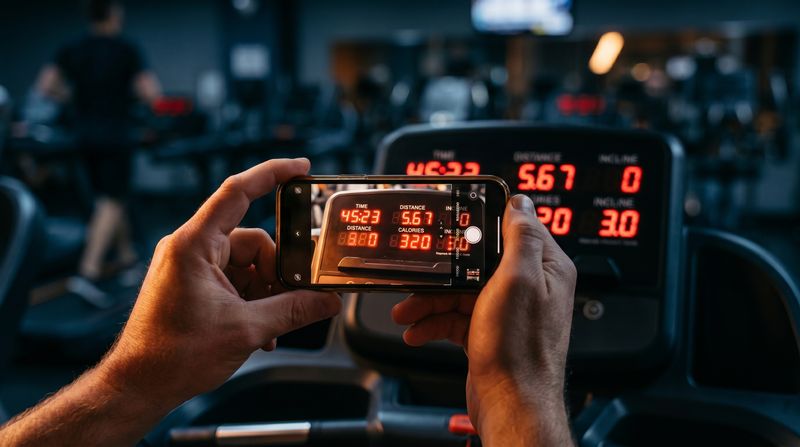
I sit on the chest press machine, phone in hand, and dictate one sentence to Claude. The set is logged. The Apple Watch data fills itself in. Here is how skills and brains turned my gym session into a queryable memory.
Sorties: Fire Real Actions Straight From Your AI Chat
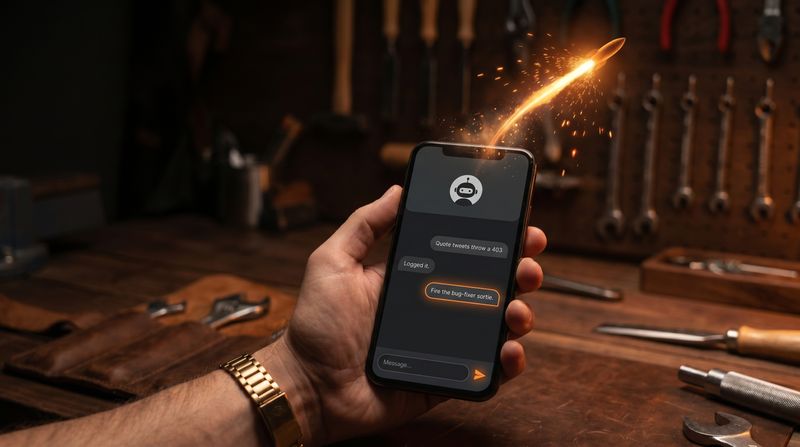
A Sortie turns a sentence in your AI chat into a real action. Fix a bug, message your team, fire an automation. Set it up once, fire it by name from anywhere, and your keys never touch the conversation.